

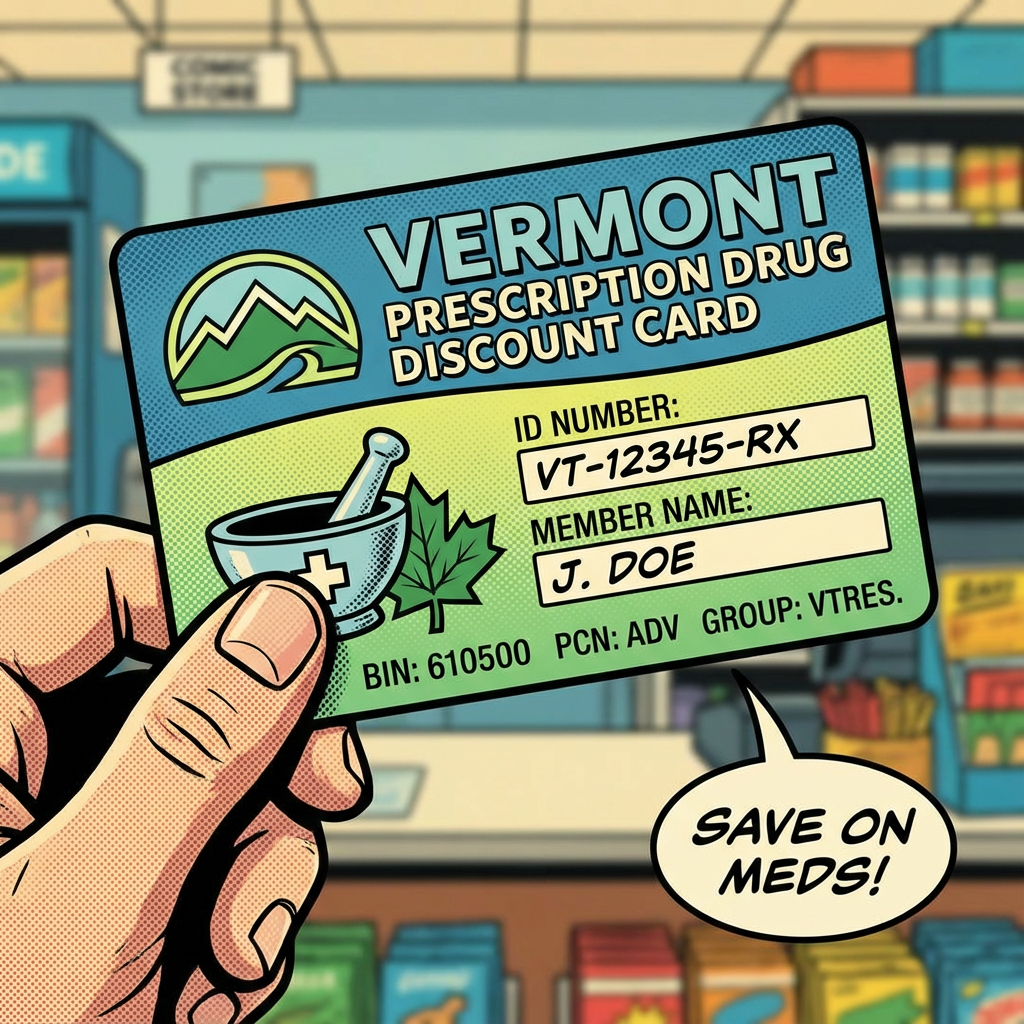
Act 132 creates a statewide Vermont Prescription Drug Discount Card Program, administered by the State Treasurer, to pool Vermont’s prescription drug purchasing power with other states, territories, and certain non-governmental organizations. The goal is to negotiate lower prices on medications for all Vermonters. The bill sets up the legal authority for joining multi-state purchasing/discount arrangements, establishes how program funds would be handled, preserves start-up funding and reporting requirements, and now also adds provisions intended to ensure that certain amounts paid using the discount card or similar assistance can count toward insured Vermonters’ deductibles and out-of-pocket obligations, subject to specified limits.
The Details:
-
Vermont Prescription Drug Discount Card Program
- Establishes the Vermont Prescription Drug Discount Card Program and places it under the administration of the Office of the State Treasurer.
- States the core purpose: to pool Vermont’s prescription drug purchasing power with other U.S. states, territories, and nongovernmental organizations to obtain better prices.
- Makes the program available to all Vermont residents (universal eligibility, not income- or age-limited).
- Allows the Treasurer to charge reasonable fees to defray program costs and gives the Treasurer discretion to set the amount and collection method based on actual costs, notwithstanding other fee-setting statutes.
- Requires an annual report (by Jan. 15, 2028, and each year thereafter).
-
Program funding and administration
Monies received by the Program from transfers, gifts, grants, donations, or other sources, including monies provided through a cooperative arrangement, are to be deposited into the Financial Literacy and Economic Empowerment Trust Fund and made available to the Office of the State Treasurer to defray administrative costs. -
Insurance deductible and out-of-pocket treatment
The bill now provides that the amount paid for a prescription drug after application of the Vermont Prescription Drug Discount Card by an individual covered by a health insurance plan shall be attributed toward the covered individual’s deductible and out-of-pocket responsibilities in accordance with existing insurance and pharmacy benefit manager law.These provisions generally apply most clearly where:
-
there is no generic drug or interchangeable biological product; or
-
a generic or interchangeable biological product exists, but the patient accessed the drug through prior authorization, step therapy, or an exceptions and appeals process.
For people who purchase a drug without using their insurance benefit for that drug, insurers and pharmacy benefit managers must make proof-of-payment forms available and provide notice about how consumers can submit documentation so their spending can be properly attributed.
-
-
Implementation report
-
Directs the State Treasurer to report to the General Assembly on progress in implementing the Program as of January 15, 2027.
- Report must include:
- Recommendations to improve administration
- Proposed participant fees (if any)
- An estimate of projected State costs if additional financial support is needed to administer the Program beyond fees and existing resources.
-
-
Ongoing Report
Requires the State Treasurer to annually report prior-year activities, including:-
the number of Vermont residents participating;
-
the number of pharmacies participating;
-
the amount of prescription drug savings achieved; and
-
the impact, if any, on the viability of Vermont pharmacies.
-
-
Evaluation and start-up funding
-
Appropriates $50,000 from the General Fund in FY2027 to the Office of the State Treasurer.
-
Funds are for developing and implementing the Vermont Prescription Drug Discount Card Program (planning, contracting, outreach, systems, etc.).
-
-
Effective date
- The act takes effect July 1, 2026.
The Good:
|
The Bad:
|
Analysis:
Taken together, Act 132 appears to be a low-cost, low-risk, and potentially high-yield measure to improve prescription drug affordability for Vermonters:
- It leverages proven models in other states and existing multi-state infrastructures like ArrayRx.
- It offers universal access, with particular benefit for underinsured and middle-income residents squeezed by high deductibles and rising premiums.
- It includes reporting and a dedicated fund, giving the Legislature tools to monitor outcomes and adjust the program.
Its main limitations are that it does not tackle drug prices at their root and may provide less relief for very high-cost specialty drugs. But as a pragmatic, near-term affordability tool that complements deeper structural reforms, it represents a positive and sensible development, especially if coupled with strong transparency, oversight of contracting, and a willingness to iterate based on the required annual reports.
Current Status:
The bill was signed by the Governor on June 15, 2026 and will now become law.
Last updated: 6/20/2026
DISCLAIMER: Generative AI used to assist in the production of this report.
News coverage on H.577 |
Read the Bill |
More bill summaries |