


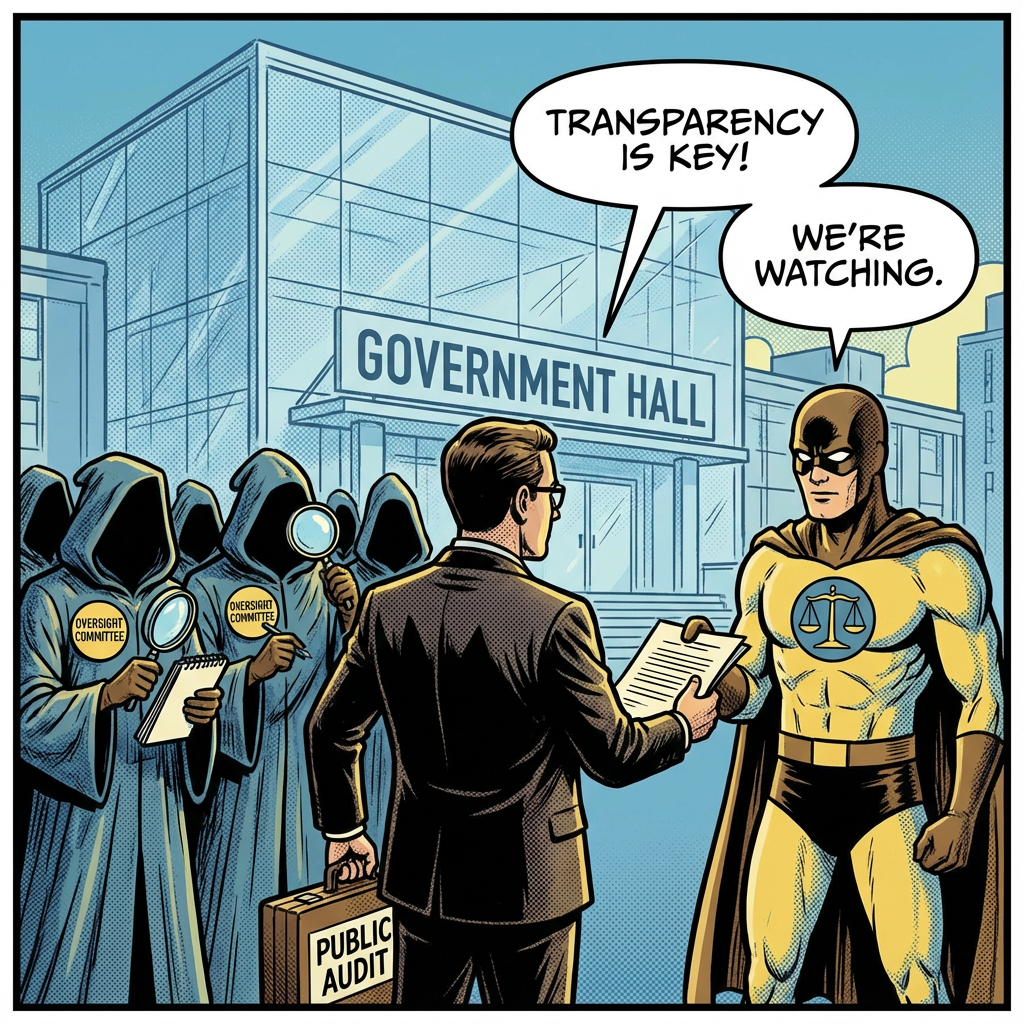
H.67 creates a Pilot Government Accountability Project, to be conducted by the Joint Fiscal Committee, to examine governmental practices, make recommendations on improving those practices, and develop effective tools for evaluating government accountability.
The Details:
-
Project Structure and Administration
The bill assigns the Joint Fiscal Committee to conduct a Pilot Government Accountability Project. The Chief Fiscal Officer of the Joint Fiscal Office, in consultation with the Speaker of the House and the President Pro Tempore, is responsible for selecting issues for the Committee’s consideration by August 1, 2026. -
Project Duties and Scope
The Joint Fiscal Committee is charged, to the extent feasible, with completing several accountability-focused functions, including:- Examining, investigating, and analyzing selected issues.
- Reviewing whether State programs and initiatives are advancing the policy goals established in statute.
- Considering available research, independent evaluations, audits, and performance measures relevant to State programs and policies.
- Highlighting effective practices, identifying barriers to implementation, and recommending opportunities for improvement.
- Providing information and recommendations to help align appropriations, statutory intent, and measurable results.
- Requesting updates from relevant agencies on actions taken in response to recommendations.
- Coordinating with legislative committees of jurisdiction, the State Auditor, the Chief Performance Officer, and other relevant entities to avoid duplication.
- Surveying available State data and documented impacts.
- Considering how program outcomes and performance information are communicated to support transparency and informed decision-making.
- Considering the development or use of evaluation tools to assess program outcomes and performance.
-
Support and Reporting Infrastructure
The bill authorizes the Legislative Joint Fiscal Office to support the Pilot Government Accountability Project by either:- Contracting with a consultant for a two-year term; or
- Creating a new exempt limited-service position for a two-year term.
It also appropriates $300,000 from the General Fund in fiscal year 2027 for that support over a two-year period.
-
Reports Required
The Joint Fiscal Committee must present and submit written reports to the House Committee on Government Operations and Military Affairs and the Senate Committee on Government Operations:- On or before December 15, 2026; and
- On or before November 15, 2027.
These reports must include findings on the issues examined and any recommendations for legislative action.
The Good:
|
The Bad:
|
Analysis:
The legislation emphasizes data-driven government accountability by creating a pilot process to examine how evidence is used to inform policy, how State laws are implemented, and how legislation may be structured to achieve its intended outcomes. As cited in the House-passed bill, the act seeks to support “consistent and transparent accountability practices through simple, clear, independent, objective, and fact-based processes.”
Compared with earlier versions of H.67, the bill has become narrower and more pragmatic. Rather than creating a new permanent Joint Government Oversight and Accountability Committee, the current version relies on the existing Joint Fiscal Committee to test this concept through a pilot project. That change may make the bill easier to administer and less institutionally disruptive, while still advancing the core goal of improving oversight and performance evaluation.
At the same time, narrowing the bill into a pilot may reduce its long-term structural impact. The success of the legislation will likely depend on the quality of the issues selected, the usefulness of the data gathered, and whether the Committee’s reports produce actionable recommendations that legislators are willing to carry forward.
This legislative approach aligns with principles often emphasized by Campaign for Vermont, including data-driven political discourse and accountability in state government
Current Status:
The bill passed by the House but the Senate failed to move the bill before adjournment on 5/29/2026, meaning the bill is dead and will need to be re-introduced.
Last updated: 6/04/2026
DISCLAIMER: Generative AI used to assist in the production of this report.
News coverage on H.67 |
Read the Bill |
More bill summaries |