
There is pending a disturbing, possibly cruel, conflict of economic forces facing Vermonters.
According to the Social Security Administration, there is an established population of 133,773[1] Vermonters over 65, or nearly 21% of the State’s population, who rely on Social Security.
This is a population that is clearly not positioned to absorb a big property tax increase in 2026. This past November, Social Security recipients were given notice that social security benefits will increase by a meager 2.8% in 2026. [2]
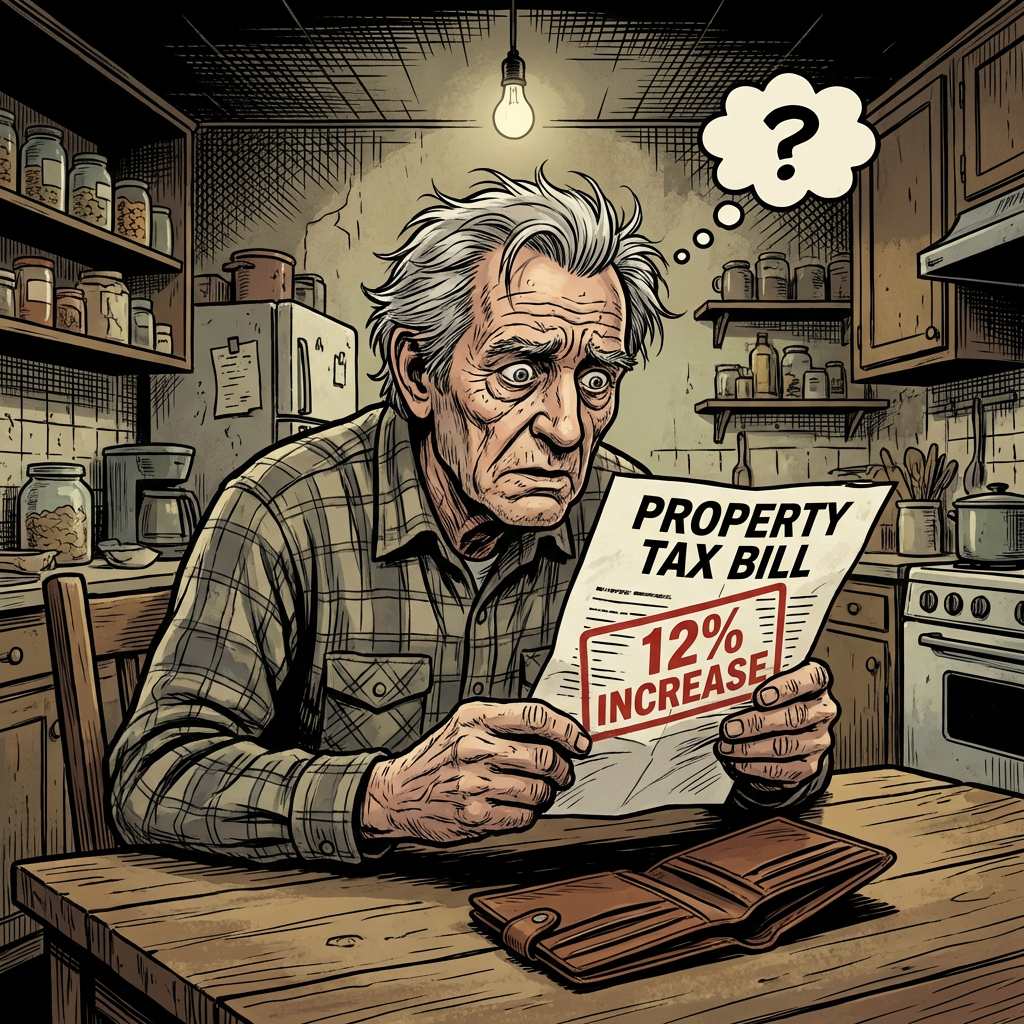
This COLA does not compare well with the projected 2026 property tax increase. Consider this conclusion crafted by Vermont’s Tax Commissioner in the Commissioner’s annual letter profiling the property tax crisis before the Legislature.
“This year’s letter projects education property tax bills to increase by a statewide average of 11.9% next fiscal year he concludes”.[3]
The effort to find a path forward for k-12 education reform has absorbed much time and money. Hopefully the end is near. But it might help to get some measure of money at least that may be acting in counter productive ways to the efforts of reform.
Recent legislative analysis of the Teachers Retirement fund indicated there were 9955 “active” teachers enrolled in 2021, followed by 10,567[4] in 2024, for an increase in “active” teachers of 612 over the three-year period. The report profiles the average annual compensation for an Active Member at $73,263. Given that Vermont repeatedly profiles among the states with the lowest k-12 ratio of students to teachers, spending $44.8 million for an additional 612 teachers while the reform effort is still underway seems oddly ironic. Keeping in mind the State Teachers Retirement Fund is a state fund and not a local fund, limiting further access to the fund over the next few years might be the leverage necessary to foster actual reforms.
This commentary is by Tom Pelham of Berlin. He was finance commissioner in the Dean administration and tax commissioner in the Douglas administration and served on the Vermont House Appropriations Committee as an Independent. Tom is also one of the co-founders of Campaign for Vermont.
[1] https://www.ssa.gov/policy/docs/statcomps/oasdi_sc/2023/vt.html
[2] https://www.ssa.gov/news/en/cola/factsheets/2026.html
[3] https://tax.vermont.gov/press-release/commissioner-taxes-releases-fy2027-education-tax-rate-letter
[4]https://legislature.vermont.gov/Documents/2026/Workgroups/House%20Ways%20and%20Means/Bills/H.454/Education%20Finance/Pensions/W~Chris%20Rupe~Overview%20of%20Teacher%20Pensions%20Presentation~2-21-2025.pdf