


Act 126 (formerly S.298) creates a new Vermont voter protections framework aimed at protecting access to voting and election administration, while also updating rules on voter checklist use, candidate disclosures, campaign-related security expenses, election intimidation, voting rights enforcement, and candidate compliance procedures.
The Details:
- Establishes a new offense for intimidation, threats, or coercion directed at voters, election officials, public servants, or public employees when the purpose is to obstruct voting or election administration. Violations may result in criminal penalties including fines, imprisonment, or both.
-
States that election-related offenses may not be interpreted to deny or impair the voting rights of any registered voter.
-
Prohibits the State or municipalities from applying voting qualifications, standards, or procedures in a way that results in denial or abridgement of voting rights based on race, color, language minority status, or disability.
-
Defines a vote denial or dilution violation using a “totality of circumstances” standard, focused on whether members of a protected class have less opportunity than others to participate in the political process or elect representatives of their choice.
-
Explicitly includes disability as a protected class, reflecting a major issue raised in committee testimony by disability-rights advocates.
-
Clarifies that the bill does not create a right to proportional representation and defines terms such as “municipality” and “protected class.”
-
Places vote denial and dilution protections within Chapter 35 of Title 17, an organizational change discussed in committee as a way to align these provisions with the Attorney General’s broader investigatory authority.
-
Authorizes the Attorney General to bring civil actions when there is reasonable cause to believe a voter protections violation has occurred and that voters’ rights were affected.
-
Allows courts to issue injunctive relief, impose civil penalties, and require reimbursement to the State for investigation and prosecution costs.
-
Expands sworn-use requirements for access to the statewide voter checklist, municipal portions of that checklist, and other municipal voter checklists, including promises not to use the data for commercial purposes or knowingly disclose it to foreign governments or certain federal entities for prohibited purposes.
-
Requires the State Ethics Commission to provide informational resources, FAQs, and candidate assistance regarding financial disclosure requirements for candidates for state, legislative, and county office through May 30, 2027. This language was changed in the Senate is now set out as a temporary standalone section through that date, rather than as a permanent amendment to statute.
-
Requires the Secretary of State’s Office to provide links to those Ethics Commission materials. Note: the Senate kept the linking requirement but paired it with the temporary Ethics Commission support period through May 30, 2027.
- Requires the State Ethics Commission and the Secretary of State’s Office to submit a joint report recommending how candidate disclosure forms under should be managed going forward. Added by the Senate.
-
Suspends enforcement of candidate disclosure penalties through May 30, 2027, so delinquent filers are not penalized during the transition period.
-
Expands the definition of campaign expenditures to include dependent care costs tied directly to campaign activity and candidate security expenses such as monitoring systems, protective detail, and cybersecurity.
- Updates the definition of “political committee” or “political action committee” to clarify that such entities accept contributions or make expenditures to support or oppose candidates, influence elections, or advocate on public questions. New in Senate amendment.
-
The would take effect upon passage.
The Good:
|
The Bad:
|
Analysis:
Act 126 became a more targeted and operational bill than its original title suggests. In its current draft, it builds a state voter-protection structure focused on intimidation, vote denial and dilution, and civil enforcement, while also folding in a set of election administration changes. Lawmakers were also responding to immediate confusion over candidate financial disclosure forms, agency responsibilities, and whether existing institutions have enough capacity to carry out new duties assigned in this bill and elsewhere.
The most meaningful change made during the committee and amendment process was not to the bill’s core voter-protection structure, which largely stayed intact, but to the candidate disclosure sections. Instead of permanently amending statute as the House initially proposed, the final version creates a temporary framework through May 30, 2027 requiring the Ethics Commission to provide disclosure guidance and candidate assistance, the Secretary of State to link to those materials, and both offices to submit a joint report by January 30, 2027 on how disclosure forms should be managed in the future. That narrows the long-term effect of this section while acknowledging that the current arrangement may not be the final one.
The strongest policy case for the bill is that it creates more explicit state protections for fair participation in elections. That matters for Vermonters because public trust in elections affects every downstream policy area, including education, economic opportunity, and local governance. The express inclusion of disability as a protected class is especially significant in light of testimony describing turnout gaps and barriers to in-person participation. If Vermont is serious about equal civic access, disability access cannot be treated as an afterthought.
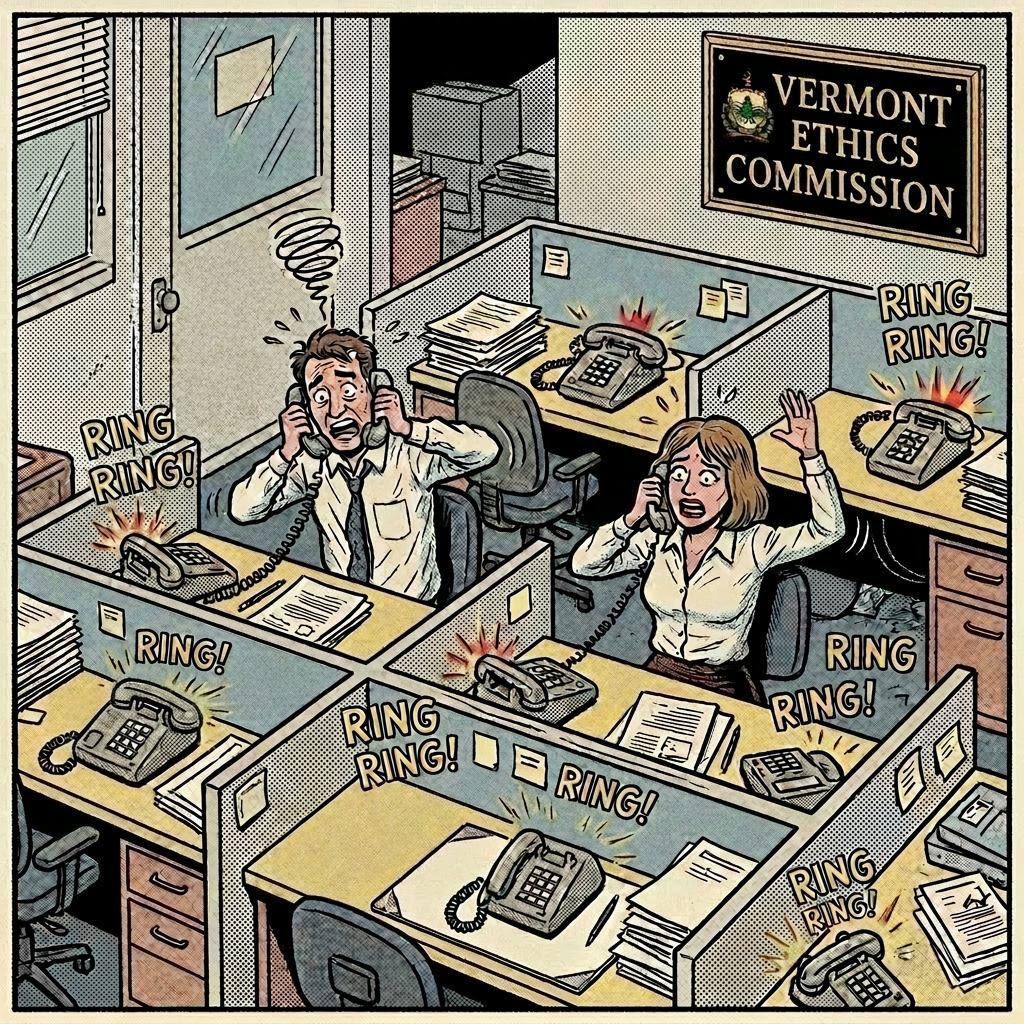
At the same time, the hearings also reveal a classic governance trade-off: passing a law is easier than building the capacity to implement it well. The Ethics Commission provisions may improve candidate guidance and reduce confusion in theory, but the committee testimony and the concerns CFV has raised show that the Commission has been asked to take on additional "customer service" responsibilities without corresponding staffing to support it.
The enacted bill softens that by making the arrangement temporary and requiring a report, but it does not solve the underlying capacity issue. Better guidance can improve compliance, but if the agency responsible for guidance is under-resourced, the system may still frustrate candidates and leave both candidates and voters with delayed or incomplete information. Likewise, suspending disclosure penalties may be viewed by some as a sensible bridge during an administrative transition and by others as a step back from accountability.
Campaign for Vermont has weighed in on this bill and the lack of resources provided to the Ethics Commission to carry out their current workload let alone the new responsibilities this bill adds.
Current Status:
The bill was signed by the Governor on 6/8/2026 and is now law.
Last updated: 6/14/2026
DISCLAIMER: Generative AI used to assist in the production of this report.
News coverage on S.298 |
Read the Bill |
More bill summaries |