Delaying Ethics Oversight (H.1/Act 44) - Overview & Analysis
The Senate version of H.1 (Act 44) delays the implementation of investigatory authority and other miscellaneous powers of the State Ethics Commission until September 1, 2027.

A bill that would delay implementation of oversight authority for the state's Ethics Commission passed out of Committee last week and is scheduled for a vote on the Senate floor this week. See our full analysis of the bill...
We are mixing up our format a little bit this week (let us know what you think!). But don't worry, we are still bringing you in-depth coverage on a wide range of topics.
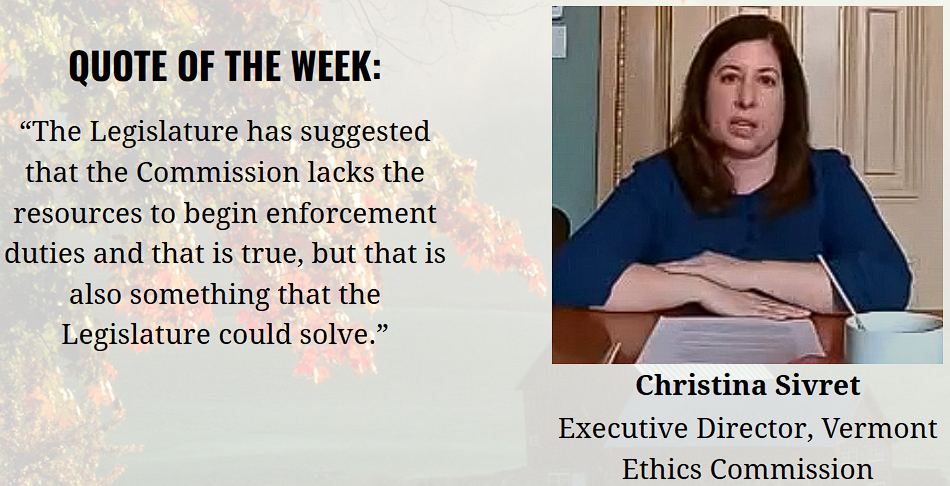
The most important update (in our view) is that the bill dealing with the Ethics Commission's oversight authority passed a key vote in the Senate this week. The Senate's version would delay the implementation of the Ethics Commission's new powers for two years. While we are still disappointed in this outcome, it is better than the House Version which would have removed independent oversight of the Legislative and Judicial branches of state government permanently.
Major initiatives in areas such as education, housing, and health care are nearing the finish line this week as key committee votes take shape. Most notably, the Senate Education Committee advanced the education reform bill in a key vote on Friday. While there is much work left to do, the Senate version (so far) seems better than the House's and the vote keeps the effort on track to kick off the reform process this year.
The bill aims to address Vermont’s workforce shortages in construction, health care, and manufacturing by leveraging the skills of military retirees and their spouses. The bill also builds on the 2024 establishment of the Office of Workforce Strategy and Development to enhance workforce coordination.
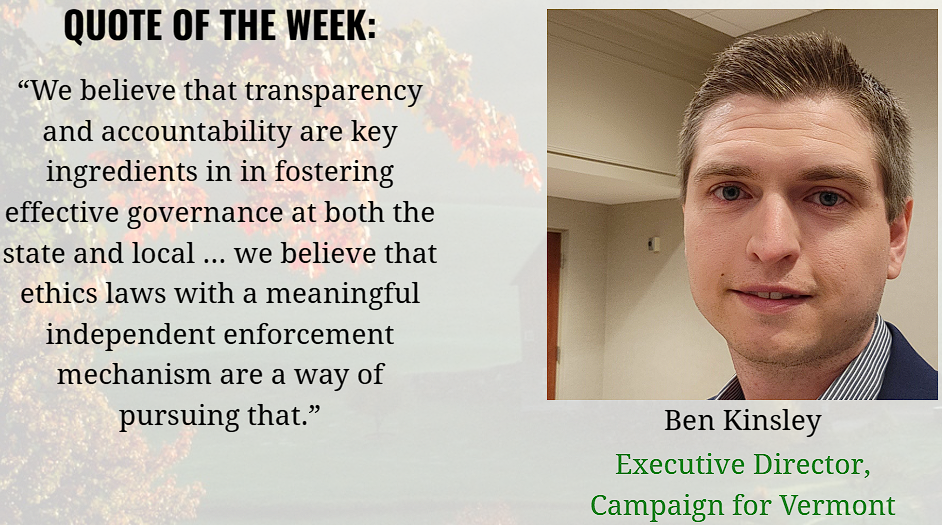
I testified this week in the Senate Government Operations Committee, urging them not to close the door on independent oversight for the Legislative and Judicial branches of State government. As I am sure you are aware, the House passed a bill that would remove a requirement that these two branches consult with the statewide Ethics Commission; this is a concerning step backwards in the progress we have made in the last decade around Vermont ethics reform.
The bill, H.480, aims to adjust miscellaneous laws related to education including topics such as school safety, virtual learning, Board of Cooperative Education Services (BOCES) grants, Secretary of Education vacancies, education on military related opportunities, cell phone free schools, independent school moratorium, cardiac emergency response plans, reading proficiency aid, tuition benefits for National Guard members, expanded access to Career and Technical Education (CTE) programs, and school library policies.
The bill proposes amendments to the Certificate of Need (CON) requirements for health care facilities in Vermont, specifically increasing the monetary thresholds that trigger the need for a CON. This bill aims to streamline the process for health care facilities while ensuring that significant projects still undergo necessary oversight while allowing smaller projects to proceed without intervention and added cost.
There was lots of activity this week across multiple fronts as legislators push to get their priorities across the finish line before the end of the session, which is rapidly approaching. Legislative leaders have already indicated that they expect to come back in late May for a veto session, so they are currently targeting the second weekend in May for adjournment; this effectively gives Committees two weeks to get bills back to the floor, if they are to pass this year.
The recent imposition of tariffs is likely to create a significant struggle for businesses in Vermont and Canada, causing widespread concern about the potential loss of jobs, revenue, and the survival of small businesses. The economic damage is evident, affecting everything from manufacturing to retail.