


Here's a sentence I keep rereading: no state in the country fell as far in early reading over the last decade as Vermont. Not one.
I know that's hard to hear. Many of us grew up believing Vermont's schools were among the best in the nation, and for a long time they were. But the data has been telling us a different story for years, and our kids can't afford for us to keep looking past it.
So this month, I want to talk about reading. There is good work that the state has started, and I want to share what Campaign for Vermont is doing to help.
Until about third grade, children are learning to read. After that, they're reading to learn. Fourth-grade science, history, even math word problems all assume a child can pick up a book, review a worksheet, or look at a white board and understand it.
Picture a nine-year-old who never quite cracked the code. She's bright and curious, but now every assignment depends on a skill she hasn't fully mastered yet. Each year the gap gets a little wider and the work gets a little harder. Kids in that spot usually don't fall behind only in reading. They fall behind in everything.
The research backs this up. Students who aren't reading proficiently by the end of third grade are four times more likely to leave high school without a diploma than kids who are. For children who also grow up in poverty, the risk is even higher.
That's why we keep coming back to early literacy. Everything else is built on it.
The best yardstick we have for measuring literacy is the National Assessment of Educational Progress (NAEP), also called "the Nation's Report Card." It gives the same test to a sample of students in every state, so we can compare apples to apples.
Here's Vermont's average fourth-grade reading score over time (NAEP):
|
Year |
VT 4th Grade Reading (avg. score) |
|
2002 |
227 |
|
2022 |
217 |
|
2024 |
213 |
|
2024 national average |
214 |
|
2024 Mississippi |
219 |
A few things jump out:
- We're down 14 points since 2002. And we kept dropping from 2022 to 2024, while many other states were starting to recover.
- We've slipped below the national average. According to the Agency of Education, 2024 was the first time Vermont fell below the national average in literacy. Statistically we're about even with the country, but the direction is what worries me.
- Only 31% of our fourth graders read at a proficient level. Among economically disadvantaged students, it's just 18%.
- Mississippi now outscores us. About ten years ago, Mississippi was near the bottom of the nation. In 2024 its fourth graders scored 219, six points ahead of Vermont.
Last year we asked economist Art Woolf to dig in further, and he found that when demographics are accounted for Vermont drops to the bottom five states for 4th grade reading.
Our own state testing tells the same story. The Agency of Education's 2025 State Report Card found that fewer than half of Vermont third graders were proficient in English language arts. Over the same years, the four-year graduation rate fell from 89% in 2017 to 82% in 2025.
And this didn't start with the pandemic. The Agency itself calls it a "decades long pattern" of decline.
Now the good news: Vermont state government is taking this seriously.
In 2024 the Legislature passed Act 139, the state's most comprehensive literacy law to date. That legislation lead to the Read Vermont program, which is based on the "science of reading," meaning that educators use the evidence-based building blocks of reading and teach them in the correct order: hearing the sounds in words, connecting those sounds to letters, then building fluency, vocabulary, and comprehension. It's the same approach behind the literacy recoveries in other states.
Some of these changes may be new to you:
- Children in grades K–3 are now screened for reading difficulties, so schools can catch problems early, before a child falls far behind.
- Parents are informed. If your child scores well below benchmark, the school is required to let you know and explain what it's going to do about it.
- Help doesn't stop at third grade. State law now requires extra reading instruction for any student, at any grade, whose reading is significantly below grade level.
- Teachers are getting coached. The Read Vermont Institute, now in its second year, gives K–2 teacher and principal teams a full year of hands-on coaching in how to teach early reading effectively.
Individual Vermont communities are stepping up, too. Mountain Views Supervisory Union recently shared how it rebuilt its approach to reading with new materials, better training, and teachers' input at every step. I love seeing that.
The Agency has also launched Count on Vermont, a similar statewide effort for math from PreK through 12th grade. Teams from districts across the state are working together this year on helping to teach fractions to struggling elementary students in grades 4–8.
I'll be honest though. This work has been running on a shoestring budget. Act 139 came with no dedicated funding, so Read Vermont launched on federal dollars that have since dried up, and it had to fight for a place in this year's state budget. The states that turned things around stuck with it for a decade or more in order to gain on-the-ground buy-in for change.
What we're doing about it
This is why literacy recovery is one of our top priorities this year. Our team is currently digging through Vermont's literacy efforts piece by piece and comparing them with states that have actually turned things around: Mississippi, Louisiana, Tennessee, etc.
We'll share what we find, along with our recommendations, in early December, well before lawmakers return to Montpelier in January. Genuinely, the state has started something good here, and we want to help make it work and make sure the implementation is meeting expectations.
You can help us by supporting our work. Your support helps us finish this research and get it in front of the people who can act on it.
Teaching a child to read is one of the most hopeful things a community can do. Vermont has done hard things before, and we can do this one too.
On behalf of Vermonters,
Pam Mackenzie
President, Campaign for Vermont

| Join Our Newsletter |
|
|
Tomorrow is Election Day!If you haven't already, get out and vote for Vermont's future. Democracy requires an engaged and active electorate. Sitting this one out means that someone else gets to make choices that impact your life and your state. |
|
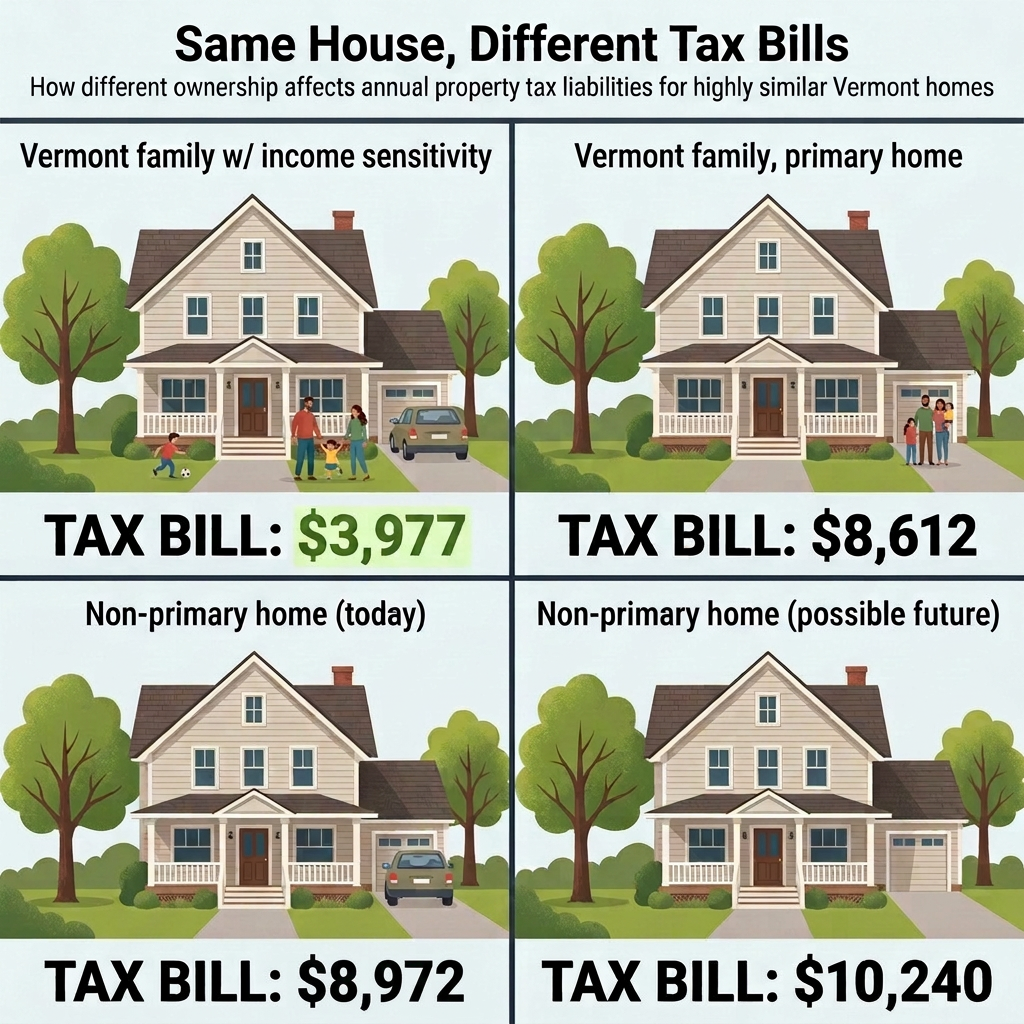
How Does Vermont's Property Tax System Work?Polls show most Vermonters like the idea of a tax on "second homes." Probably because the idea of someone else paying higher taxes in order to lower our own is appealing. But, before we can truly judge whether one makes sense, we need to understand our current property tax system. |
|
|
|
|
A Second Home Tax: Is it Equitable?Vermont cannot reliably lean on a Second Home tax to effectively target the emotional “who” we desire to tax. And, if we can’t do that, the policy falls flat.
|
|
CFV Adds Pelin Kohn to its Advisory CouncilPelin brings a local municipal perspective, hands-on experience, adnd an earnest curiosity about government and how we can make it work better. |
|
|
|
|
‘Virtual’ Mergers Will Likely Produce Better ResultsBringing this one back for a second month because it is so important... 'virtual' mergers have a higher chance of success than conventional ones for both students and taxpayers.
|
|
NotchFM InterviewBill Sayre interviewed Ben Kinsley on October 14th about the mechanics and pitfalls of a "second home" tax. |
 |



| Join us! |
News Worth Reading:
Our top picks of local must-read news this month.
- A last-minute voter’s guide to the Vermont election - Vermont Public
- Survey: Vermont's Business Climate Has Consequences - VermontBiz
- Scott and legislative leaders draft emergency aid plan for home heating - Vermont Public
- Janoo Says Private Equity Is Driving Up Vermont Home Prices. The Numbers Don't Back It Up - Compass Vermont
- Vermont Spends More Than Twice as Much Per Student as Mississippi. Mississippi's Fourth Graders Score Higher on National Tests - Compass Vermont
- Vermont School Districts Already Face Tough Budget Decisions - Seven Days
- State Board of Education Chair Resigns Abruptly - Seven Days
- Beyond the Vermont Way: What the New Education Chair Knows About Doing Schools Differently - Compass Vermont
- Wobby: Vermont needs homes, we know how to build them, if Vermont lets us - VermontBiz
- Vermont's unemployment rate remains low, but its aging population is leaving the workforce - Vermont Public
- Rural Vermont is losing its say over its own land - VTDigger
- Vermont Programs Backed OnLogic’s Growth With Up to $2.9 Million in Incentives. Now It’s Selling for $675 Million. - Compass Vermont
- Could nuclear power return to Vernon? - VTDigger
- Vermont Tech Jam Hosts Innovative Employers and Educators at Hula - Seven Days
- Lawmakers hear concerns over Vermont homeless law's rollout - Times Argus
- Former Burlington Schools Administrator Investigated for Embezzlement - Seven Days
- Moore: In rural Vermont, outdoor recreation is fueling local economies and strengthening community life - VermontBiz
Campaign for Vermont's mission is to advocate for public policy changes by reconnecting middle-class Vermonters to their government.