

This week lawmakers delved deeply into education funding and reform, reflecting ongoing efforts to build a more equitable and sustainable system amid demographic challenges and a persistent spending crisis.
| This is a truncated version of our weekly legislative update. To receive the full version, please sign up for our legislative updates (it's free!). |
The House Ways and Means Committee grappled with the yield bill (AKA the property tax bill) for FY2027, while debating whether or not the excess spending threshold (an existing mechanism in our funding system) should be used to put downward pressure on school budgets for the next year or two while reform efforts are underway. Current projections indicate that school budgets brought forward in March will account for another 5% increase in spending...
This spending growth ties into broader fiscal pressures, including grand list growth influenced by incentives like the Community Housing and Infrastructure Program (CHIP), and the need for better data on Medicaid and federal funding flows to avoid unintended tax shifts. Meanwhile, the Senate Education Committee heard from Agency of Education Secretary, Zoie Saunders, on the Agency's reorganization around strategic pillars, from academic performance to special education improvement, alongside plans for a statewide Career Technical Education (CTE) governance structure via an Education Service Agency (ESA) to ensure universal access and equity in workforce preparation.
The education themes carried into discussions on chronic absenteeism, showcasing some of the challenges that our students face. Chronic absenteeism rates have climbed to 30% in Vermont (up 67% since 2019) driven by out-of-school factors like poverty, transportation, and mental health. This has prompted calls for a prevention-focused policy overhaul emphasizing early interventions over punitive measures.
The House Education Committee began grappling with the next steps on Act 73, debating governance, maps, and voluntary mergers without overreaching into local decision-making, while stressing public trust and rural input to avoid disenfranchising small schools. These conversations underscore Vermont's push for data-driven reforms that align with family-sustaining jobs and demographic shifts, echoing Campaign for Vermont Prosperity's priorities for education transformation and accountability. However, these discussions have a highly contentious undertones with pressure from the Governor to do something around district governance while the data & research does not support that approach and local communities are pushing back.
On the fiscal and policy fronts, stability met urgency in budget and health hearings. The Emergency Board forecast revealed minimal variances across major funds (under 1% variation from prior estimates) offering cautious optimism amid national debt risks and consumption patterns being driven by high-income households. However, corporate tax volatility and EV policy shifts warrant monitoring as they appear to be softening. The House Appropriations Committee's public hearing over the FY26 Budget Adjustment Act drew passionate testimonies for investments in housing vouchers ($5M requested), recovery centers ($420k more), local food purchasing ($1.5M), and migrant health navigation ($168K), emphasizing prevention of homelessness and social service gaps.
The House Health Care Committee explored H.577, which would create a prescription drug discount card program (advocated for by the Treasurer). The program would draw on Connecticut's ARx model for cross-state savings, which has seen up to 80% savings on generic medications.
House Government Operations Committee reviewed H.67 this week, which would enhance performance reporting and would check in on whether pieces of legislation are meeting their stated goals. This is an exciting proposition as it promotes the kind of transparent, results-based governance that we advocate for.
Overall, these hearings paint a picture of pragmatic progress: stabilizing state funds and budgets while advancing housing needs and health care affordability. An encouraging start to the legislative session for sure...
On behalf of Vermonters,
|
|
||
|

| Sign Up for Legislative Updates |
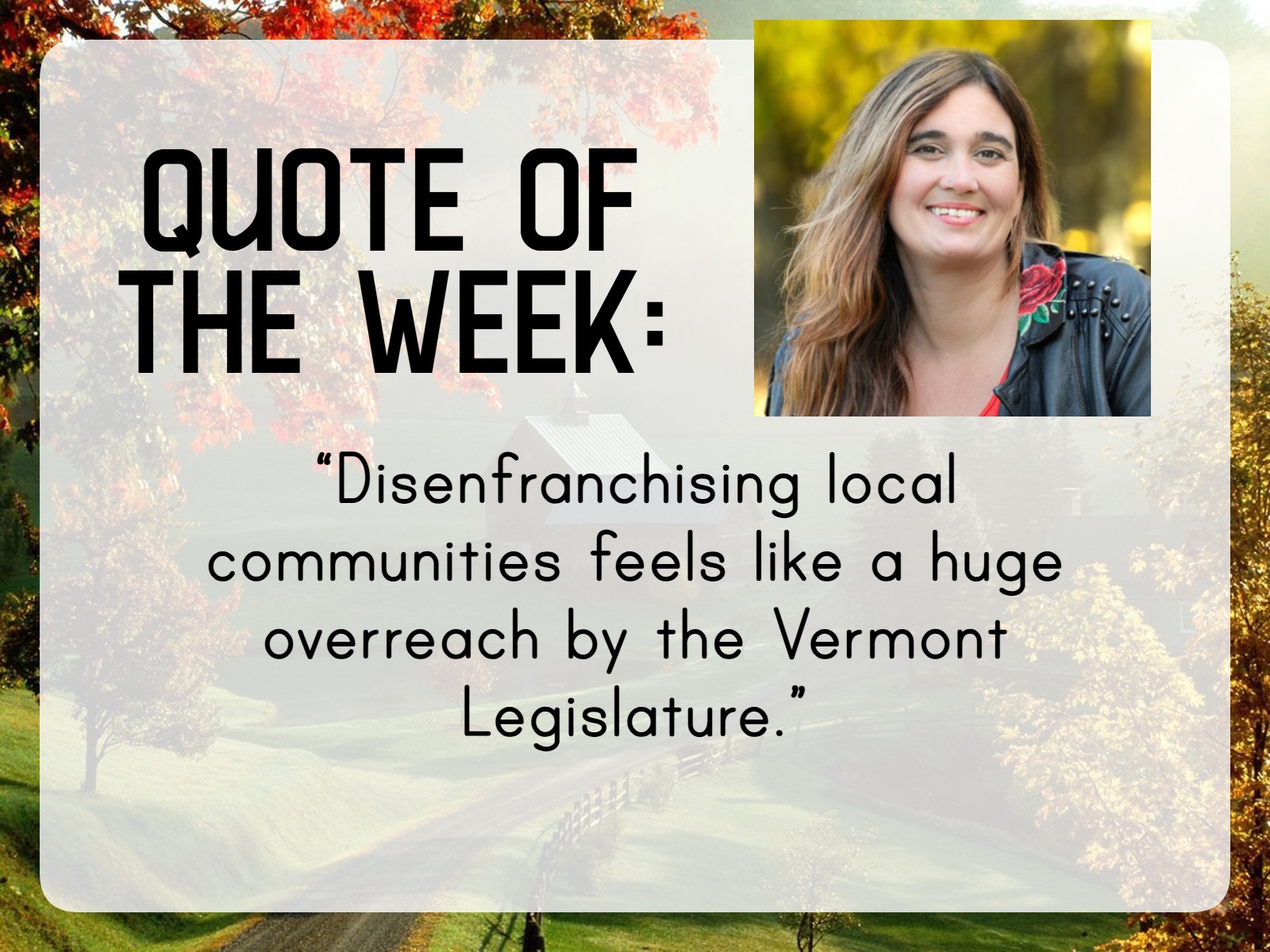
Quote of the Week:“Disenfranchising local communities feels like a huge overreach by the Vermont Legislature.” Comments related to forced school district mergers in the context of Act 73.
|
|

| Leanne Harple |
| State Rep. - Orleans 4 |
| To continue reading, please sign up for our legislative updates (it's free!). |