

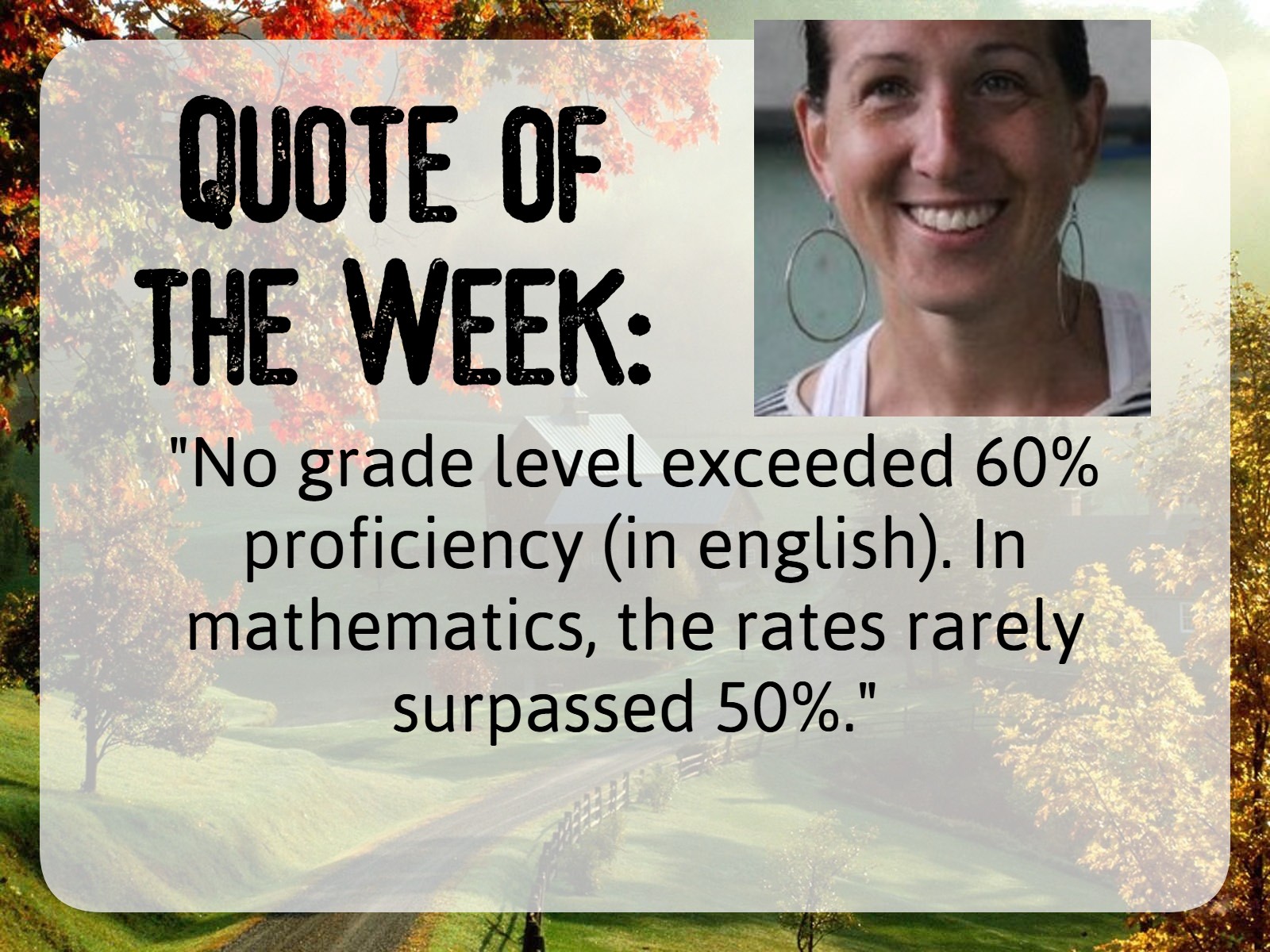
It was a busy week keeping tabs on the pre-crossover sprint. Vermont's school performance took center stage in Senate Finance's joint hearing on the annual state report card (based on the ESSA accountability dashboard), where Education Secretary Zoie Saunders revealed the stark underperformance in Vermont's schools: no english grades surpassed 60% proficiency, math rarely topped 50%, science ranged in the low 40s, and over half of schools were "not meeting" expectations or declining. Equity gaps widened dramatically with designations nearly doubling for students with disabilities, low-income kids, and English learners. These results prompted the Agency of Education reorganization and initiatives like READ Vermont (Act 139 literacy), COUNT on Vermont (math), and Act 73 graduation standards aim to reverse trends.
| This is a truncated version of our weekly legislative update. To receive the full version, please sign up for our legislative updates (it's free!). |
Some Senators pointed to "micro-districts" (<500 students) as being part of the underperformance problem, but as we know from our regression analysis of Vermont's education data, there is no significant relationship between district size and student outcomes. There are good (and bad) performing schools of all sizes. The Rural School Community Alliance has come to similar conclusions. In testimony this week they emphasized Vermont and national research showing forced mergers are unlikely to reliably produce cost savings or improve student outcomes. They recommend (like we do) achieving scale through service agencies to centralize specialized services and administrative functions, then allow voluntary mergers where appropriate.
Of course, any consolidation of school buildings would require a hefty investment in school construction aid from the state. However, the Legislature has been stymied the last few years in trying to find a funding source for said aid. The Senate Finance Committee is attempting to tackle this by creating a "wealth tax" modeled after the federal Net Investment Income Tax (NIIT). The problem is that the federal version hits relatively moderate income families (AGI of $200k for single filers / $250k joint). Given that Vermont's property taxes are already quite progressive, it almost seems to make more sense to pay for construction aid from existing revenue sources...
Oh, and for those concerned about tax flight, the New Jersey case study was highlighted again. They claim that a tax surcharge on AGI above $500k did not create tax flight in that state, but I have to wonder how much of that was because of the jobs tied to those income levels. Most of those jobs are likely not mobile so I would be curious how many residents stayed put after retirement from said jobs. How many jobs in Vermont generate income above $500k? I'll bet it's less than New Jersey... Which means that Vermont's high-income earners are likely more mobile than New Jersey. Also, thanks to Art Woolf's work on out-migration from Vermont, we know that many of Vermont's out-migrants go to New Hampshire and Florida, both of which are friendlier tax environments for moderate and high-income earners.
The House Ways & Means Committee is also working on education financing. Their work is centered on creating a new non-homestead residential property classification for property taxes that could capture rental properties (both short- and long-term) separately from commercial and industrial properties. This would allow different tax rates to be applied to these (now) three different property classifications: homestead, non-homestead residential, non-homestead non-residential. The Committee upped the penalty for mis-classifying a property from 3% to 5% this week.
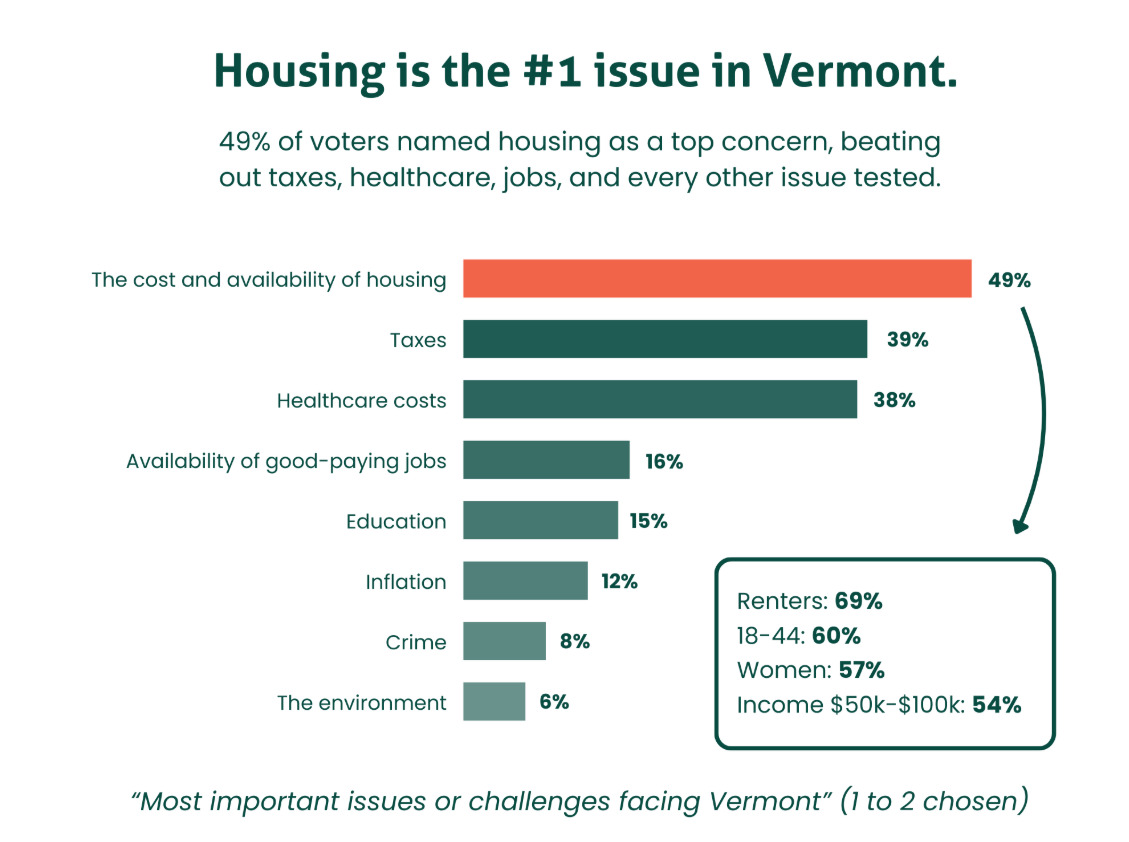
On the Housing front, H.775 began winding its way through various committees this week on the way to a floor vote. There are also discussions intensifying around the Act 181 maps for land-use regulation. Many housing advocates are now saying these maps will move us further away from our housing targets because they are so restrictive in terms of where housing can be built.
Legislators have next week off as they return to their communities for town meeting day. This is the perfect time to weigh in, urging them to take some of these issues seriously and pursue data-informed policy. Too often Montpelier operates off of vibes and not actionable data. The crossover crunch will continue when legislators return the following week so it is critical for legislators to hear from Vermonter's now about what bills need to make the cut in the week or two following the break.
Also, that means no legislative update next week. We'll be back the following week - March 14th!
On behalf of Vermonters,
|
|
||
|

| Sign Up for Legislative Updates |

| To continue reading, please sign up for our legislative updates (it's free!). |