



The crossover crunch arrived this week and it did not disappoint. The volume in both chambers intensified; marking up bills, taking votes, and wrestling with some of the most consequential education and health care questions Vermont has faced in years.
| This is a truncated version of our weekly legislative update. To receive the full version, please sign up for our legislative updates (it's free!). |
Education Reform: Two Chambers, Two Speeds
The headline story is the growing divergence between the House and Senate on Act 73. The Senate is moving with intention; the House is still searching for consensus.
The Senate Education Committee advanced a substantial draft that would codify supervisory union boundaries in statute, designating 11 large SUs while requiring a report to recommend changes to the remaining 19 standalone supervisory districts, and targets a 50% reduction in school districts (~119 to ~56). New supervisory boundaries are set to be operational July 1, 2027. The draft does protect the current operating models of today's districts and would not force them to change against their will.
By Thursday, the Senate had built out the fiscal scaffolding: $250,000 per transitional SU board ($2.75M in FY27), study committee grants up to $10,000, and merger support grants capped at $300,000 (this is a somewhat similar structure to Act 46). The foundation formula base was bumped to $16,780 per student and implementation was pushed to July 1, 2029. This is consequential because the most important thing we can do to arrest increasing school spending and property taxes is implement the foundation formula..
The House, by contrast, spent the week trying to find its footing. The Joint Fiscal Office delivered a sobering briefing on Act 73's mechanics, repeatedly cautioning that any modeling they attempted was hampered by undefined terms ("small by necessity," "sparse by necessity") and missing data on special education weights, pre-K, and CTE. Members returning from town meeting reported mixed, low-turnout budget votes and razor-thin margins. The committee remains split on how to proceed with governance reform.
On Friday, Representative Taylor introduced draft statutory language for school enrollment/attendance zones and school choice that was designed to preserve historical tuitioning patterns within Act 73's larger-district model. The draft also introduces a magnet school concept worth watching as this tool could be used to potentially preserve small schools as specialized programmatic centers.
School Budgets: Most Pass, But Not All
School administrators also briefed House Education this week on the outcomes of Town Meeting Day. Of 112 budgets voted, ~83% passed and 19 were defeated, serving roughly 15,000 students. The cost drivers are familiar but intensifying: employer health insurance now exceeds $300 million/year, rising 16% in FY25, 12% in FY26, and 7.4% in FY27. Health benefits have grown from under 10% of budgets in 2018 to ~15% today. I would note here that these are not the ONLY cost-drivers in the system. Retirement benefits increased ~$30 million this year, but health care is the one that administrators and staff continue to point to.
The Superintendents Association urged a two-track approach: continue deliberate redistricting work while enacting lower-risk measures now; shared service entities (CESAs), updated staffing data, targeted work on special education cost drivers.
On special education, the data is striking: extraordinary costs (mainly intensive out-of-district placements) account for nearly half of special education spending growth while representing only ~15% of total spending. That's an urgent cost-containment issue accounting for some of the budget volatility school districts are experiencing.
Senate Finance: Spending Controls Pass, Revenue Stalls
The committee voted 5–2 to advance S.220, lowering the excess spending threshold from 118% to 112% and permanently excluding voter-approved bond payments from that calculation. The Joint Fiscal Office estimated roughly $21 million in FY27 would be subject to the penalty, which constitutes a soft cap affecting several dozen districts, not the majority. How much downward pressure this places on school spending as a whole remains to be seen, but we know that districts actively try to avoid hitting the excess spending threshold today.
On the revenue side, S.282 (higher-income tax for school construction) hit a wall. The committee debated income thresholds ($250K–$1M) for a potential surcharge, capital gains treatment, and earmarking mechanics but couldn't find the votes. The Chair declared an impasse.
Chronic Absenteeism: Voted Out with Open Questions
House Education voted out a committee bill to address chronic absenteeism unanimously on Thursday. The bill creates new statutory definitions, requires an Agency of Education model policy, and restores a clearer enforcement chain: after 20 unexcused absences, the truant officer investigates and (if noncompliance continues) files a complaint with the state's attorney, who has discretion to prosecute (fine up to $1,000) and/or file a Child in Need of Services (CHINS) petition.
Members flagged two concerns: the 20-absence threshold could allow about 19% of the school year to go by before formal intervention. The implementation timeline creates a gap: definitions take effect July 2026, but model policy isn't required until July 2027 and school adoption not until July 2028.
Health Care: Reference-Based Pricing Advances
Senate Health and Welfare voted out both S.190 and S.197 with unanimous votes on Friday.
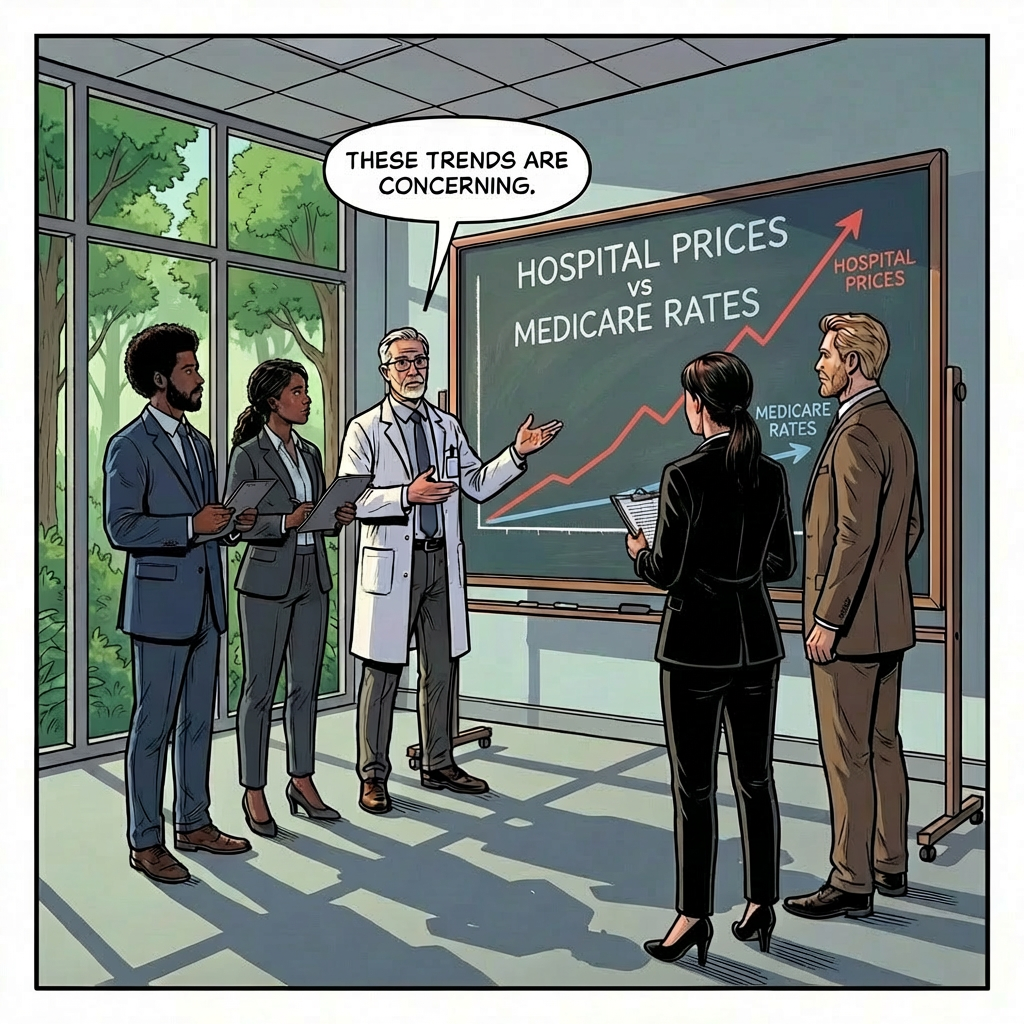
S.190 imposes a 250% of Medicare reimbursement cap for Qualified Health Plans (this is known as reference-based pricing), with targeted reductions for commercial rates exceeding 500% of Medicare. It also directs the Green Mountain Care Board to study extending reference-based pricing to state employee and teacher plans (report due January 15, 2027). Hospitals will use actual Medicare amounts received until the GMCB adopts a formal methodology by rule. See our full review of the bill.
S.197 builds on the state's Blueprint for Health plan by expanding per-member-per-month payments for primary care, requiring insurer data sharing with the Agency of Human Services, and establishing primary care spending targets.
Other Bills Worth Noting
- H.757 (Manufactured Homes): Voted out of committee unanimously. Raises the manufactured home sales tax exemption from 40% to 90% and exempts from property transfer tax. The revenue impact is roughly $200K in FY2027 and $500K annually thereafter. The bill also clarifies nonprofit-like treatment for limited equity cooperatives seeking state grants.
-
H.718 (Building Energy Efficiency): Voted out of House Appropriations, this bill is intended to create a "market-based approach" to increasing compliance with energy efficiency standards by improving the contractor registry, updating energy education, and clarifying municipal enforcement. $400K is appropriated from the General Fund for this purpose.
-
H.583 (Private Equity in Health Care): Voted out committee this week, the bill Limits PE/hedge fund control over health operations.
-
S.227 (School Immigration Protocols): Advanced with broad support. Requires ID and judicial warrant for law enforcement in non-public school areas; AOE model policies due January 1, 2027.
Looking ahead to the coming weeks, one of the biggest questions whether or not House Education coalesce around core Act 73 concepts. We will be watching this closely along with developments in the Senate as their governance bill moves forward. One thing is for sure though, the legislature is in the thick of its most consequential session in memory. The decisions made (and deferred) in the coming weeks will shape Vermont's education, health care, and fiscal landscape for years to come.
On behalf of Vermonters,
|
|
||
|

NOTE: The original version of this post incorrectly cited 115% as the final excess spending threshold in S.220. The wording around the Senate's draft governance bill was also updated for clarity.
| Sign Up for Legislative Updates |



| To continue reading, please sign up for our legislative updates (it's free!). |