


This week has that stretch of the session where the clock forces decisions. Senate Education and Senate Finance continued to wrestle with the most consequential education bill of the session, House Ways & Means dove deep into the mechanics of property tax yields and the excess spending adjustment that will shape education finance for years to come, and multiple committees advanced housing production tools while grappling with whether Vermont's housing targets are built on solid ground.
Meanwhile, the House quietly concurred on a chronic absenteeism bill that represents a genuine shift in how Vermont approaches school attendance policy, and S.325 (the Act 181 fix) is headed to a conference committee that will determine the future of Act 250 jurisdiction.
Let's dig in.
| This is a truncated version of our weekly legislative update. To receive the full version, please sign up for our legislative updates (it's free!). |
Education Reform: The Senate Keeps the Ball Rolling
The education reform debate intensified on multiple fronts this week as the Senate worked to produce its version of H.955 before time runs out.
After education reform stalled in Senate Education last week, Senate Finance picked up the ball and ran with it, adopting a new version of the bill this week. The new Senate version largely preserved the House's structural framework (CESAs, voluntary merger study committees, transition supports) but inserted several targeted changes with significant operational implications.
The most notable shifts:
-
Aspirational language upgrade: The Senate changed phrasing surrounding the equity our education system is expected to meet from "substantially equal educational opportunities" to "substantially equal opportunities for an excellent education" — a subtle but consequential framing choice that elevates the standard the system is being designed to meet.
-
CESA fee allocation tied to services: The Senate added a requirement that CESA membership fees be allocated according to services actually provided to each member supervisory union. Committee members immediately flagged the risk: if districts can effectively opt out of paying baseline costs by declining services, mandatory CESA participation becomes hollow. This is a tension that needs resolution before the bill moves.
-
Study committee thresholds lowered and loosened: The minimum ADM threshold for study groupings dropped from 2,000 to 1,500, and the contiguity requirement was removed entirely. This will allow districts in different supervisory unions to form study committees together. This creates more flexibility but also more complexity.
-
"Bad-faith" participation standard introduced: The Senate inserted a requirement that facilitators identify any district that participates in bad faith in a study committee process. The problem? "Bad faith" is nowhere defined in the bill. Some House members (rightly) raised concerns about subjectivity, litigation risk, and the chilling effect this could have on honest disagreement within study groups.
-
Foundation formula contingencies tightened: The formula will not take effect until the Legislature enacts legislation addressing geographic sparsity measures, secondary student weights, CTE accounting, and regional cost differences (including legacy collective bargaining). The Legislature continues to layer on these contingencies, pushing the likely implementation date of the new funding formula further and further out. This is consequential because funding reform is necessary in order to arrest the increase in education spending.
-
Tuition/fee prohibition softened: The House's statutory ban on schools charging families fees beyond what statute allows was replaced with legislative intent language. Some may see this as protecting school choice and others may see it as protecting independent schools.
Then came Senator Beck's proposal. On Wednesday, Senator Beck introduced a comprehensive late amendment that would fundamentally restructure Vermont's education governance system. The proposal would convert the state's 119 school districts into attendance zones, each with a Local Education Advisory Board (LEAB), and consolidate those zones into 11 or so larger school districts mapped around CTE centers. This combines elements of the Senate's original reform plan and the Governor's reform plan that was pitched last year.
Under Beck's plan, the financing model would abandon the Act 73 foundation formula entirely, relying instead on a ramped-down excess spending threshold (stepping from 112% to 105% over several years after mergers take effect in FY30). School construction spending would be exempt from the threshold and funded through existing aid programs.
The proposal is ambitious and CTE-centered (I like that part). Every proposed district would contain at least one CTE center, eliminating most cross-district tuition flows for career and technical education. LEABs would advise the larger district board, decide which grades to tuition, and weigh in on grade-closure decisions (which would require a three-quarter board vote).
Reactions from the Senate Education and Senate Finance committees were split. Members praised elements of the proposal as thoughtful and recognized the attempt to solve multiple policy goals simultaneously. But process concerns dominated: the amendment arrived late, had not been coordinated with the Agency of Education, and Senators had roughly 45 minutes to absorb a 100+ page proposal. Several members said they could not recommend moving away from the current path without further fiscal analysis, AOE involvement, and stakeholder testimony. Ultimately the Senate chose to pass on the Beck proposal for now (although stay tuned, this could make a re-appearance in conference committee).
Property Tax and Education Finance: The Squeeze Gets Technical
House Ways & Means devoted three hearings this week to H.949 (the 2027 property tax bill).
The excess spending adjustment (ESA) dominated Wednesday's hearing. JFO presented two options for aligning the ESA threshold with the Act 73 foundation formula base amount: either adjust the current multiplier from 118% to approximately 114.2%, or replace the formula entirely with the statutory base amount (inflated annually). Both approaches produce nearly identical thresholds; the choice is primarily about statutory architecture.
The more contentious issue is what the Senate did with it. The Senate-passed version drops the current multiplier to 112% (a more aggressive constraint) but then adds broad exemptions, including construction debt service, three procedural "offramps" (flat spending, flat per-pupil spending, and administrative appeals to the Secretary of Education). House members were justifiably concerned that these carveouts could effectively neutralize the ESA's intended fiscal discipline.
This is a critical design question for the future of the Education Fund. The ESA is the primary cost-containment tool in the current system (particularly if the foundation formula continues to get delayed). The Committee repeatedly emphasized predictability for school boards and equity for high-poverty districts that face legitimate cost pressures (special education, mental health services, workforce shortages) that the ESA doesn't distinguish from discretionary spending growth.
Thursday and Friday shifted to the property tax credit mechanics and the renter credit expansion. The committee heard detailed testimony on how the homestead property tax credit works (and doesn't work) for low- and moderate-income Vermonters. It is becoming clear that without updates to income sensitivity thresholds and caps that haven't changed in roughly 30 years, moderate income households are bearing an unsustainable portion of the property tax burden. For example, a $40,000-income household in a $525,000 Burlington home pays approximately 12.85% of income in combined property taxes, effectively double what the system is designed to produce (~6% of household income).
The committee also reviewed the Senate's one-year renter credit expansion (raising the calculation rate from 10% to 12.5% of HUD fair market rent and the cap from $2,500 to $3,250). The $4 million cost is offset by reducing the one-time property tax buy-down transfer to the Education Fund. This raises the average FY27 property tax bill estimate by roughly 0.2%. This is a targeted, modest intervention, but because it is a one-time expansion of the program, it creates one of those tax rate cliffs we've been talking about for years now.
The conference committee on H.949 will be where these competing pressures collide. The House and Senate remain apart on the ESA threshold and exemptions, the property tax credit parameters, and the size and allocation (one year versus multiple) of the one-time General Fund transfer of ~$105M.
Housing: How Many Homes Do We Actually Need?
The House General and Housing Committee held an intensive week of hearings examining the assumptions behind Vermont's housing targets, and whether the policy tools being assembled will actually produce the right kind of housing in the right places.
VHFA presented the methodology behind the 2024 Housing Needs Assessment and the 2025 housing targets. The headline numbers: 24,000–36,000 additional homes needed over five years for year-round residents, driven primarily by household formation (declining household size, not just population growth). At current completion rates, Vermont is on pace to add roughly 12,000 homes by 2030, well short of even the low-end estimate. Rental vacancy rates have risen modestly from pandemic lows but remain below healthy levels.
Committee members pressed hard on the gap between demand estimates and deliverable supply. VHFA was explicit: the targets are demand-based projections, not feasibility analyses. They don't account for buildable land, financing constraints, construction capacity, floodplain limits, or political feasibility. Converting a demand signal into built housing requires an entirely different (and intentional) set of tools...
The short-term rental debate added nuance. Julie Marks of the Vermont Short-Term Rental Alliance presented data showing roughly 6,000 whole-home STR listings statewide (3–4% of housing stock), heavily concentrated in resort towns, with the average listing rented only 35 nights per year. Her central argument: evidence from other jurisdictions (Hawaii, New York City, Canada, New Hampshire) shows that STR restrictions can reduce STR inventory but do not reliably short-term rental units into long-term ones.
Meanwhile, H.775 continued its journey through Senate Natural Resources and Energy with a focused hearing on support for permitting duplexes and quadplexes as "by right" in municipal zoning. Essentially meaning that towns could not exclude these types of units in locations where single family homes are allowed. This is intended to allow more substantial infill development.
Chronic Absenteeism: From Prescription to Flexibility
In a less dramatic but substantively important development, the House concurred with the Senate's amendment to H.930 (Addressing and Preventing Chronic Absenteeism). The Senate made a targeted but meaningful change: removing the House's statutory list of excused absence reasons and replacing it with a requirement for the Agency of Education (working with a broad set of stakeholders) to develop model policies and procedures on a three-year review cycle.
The House Education Committee supported the change overwhelmingly (10-1), and the rationale is sound: chronic absenteeism is a complex, multi-causal problem that benefits from flexible, evidence-based guidance rather than a rigid statutory list that can't adapt to emerging research or local context.
Primary Care Reform: Study First, Implement Later
House Health Care reviewed a significantly revised draft of S.197 (primary care payment reform) that reframes the bill from an implementation bill into a study-and-report framework. The codified per-person-per-month spending targets were removed; in their place, the bill directs the Blueprint for Health and other agencies to produce a series of reports by January 15, 2027 defining primary care services, calculating baseline spending, and evaluating implementation options.
The most contentious new provision directs AHS, the Green Mountain Care Board, and the Department of Financial Regulation to "collectively determine" where healthcare reform and regulatory functions should be housed; a charge that committee members worried could produce turf battles rather than clarity without a clear process, or outside stakeholder input.
Government Accountability: Small Changes, Big Implications
Senate Government Operations advanced amendments to S.298 that deserve attention. Changing a single conjunction had big implications in the definition of a PAC by replacing "or" with "and" so that an entity must both accept contributions and make expenditures to qualify as a political committee. This narrows the class of regulated entities and could reduce transparency if organizations that only make expenditures (or only accept contributions) fall outside reporting requirements.
The committee also converted a prescriptive statutory requirement for the Ethics Commission related to candidate disclosure forms into a temporary session law (expiring May 2027) and added a joint reporting requirement for the Ethics Commission and Secretary of State on disclosure form management, an interim step while the longer-term questions about resources and responsibility are resolved.
S.325: Conference Committee Will Decide Act 250's Future
The Senate voted to not concur with the House's amendments to S.325 (regional planning and Act 250 tier jurisdiction) and appointed a conference committee. The conference committee will negotiate the differences between chambers on how Act 181 tier jurisdiction interacts with regional planning. Stakeholders should monitor this closely.
Looking Ahead
-
Education Reform Heads to Senate Floor. The Senate version of H.955 heads to the Senate floor where the key thing to watch for will be whether or not there are enough votes to sustain a veto. If not, it will almost certainly proceed on to a three-way negotiation with the Governor.
-
H.949 (yield bill) conference committee will negotiate the ESA threshold and exemptions, property tax credit parameters, and the renter credit expansion. The fundamental question: how much fiscal discipline is the Legislature willing to impose on education spending, and who bears the cost of the answer?
-
H.775 (housing production) will see a revised draft addressing the water/wastewater capacity language, an owner-occupancy requirement prohibition, and other provisions. The committee's cautious approach is appropriate but the clock is ticking.
-
S.325 (Act 250/land use) enters conference. The road rule repeal and Tier 3 changes from prior weeks set the stage; the conference will determine final jurisdiction and planning provisions related to Act 181.
-
S.197 (primary care reform) needs process design for the Section 5 inter-agency evaluation and a realistic assessment of what the study framework can deliver without an appropriation for implementation planning.
-
The teacher workforce pipeline got a promising update this week: CCV and Vermont State University are launching stackable credentials and an all-online bachelor's with dual licensure in elementary and special education for Fall 2026. The model directly addresses the barriers that have stalled nontraditional candidates. But the perennial problem persists: sustainable funding for student-teaching stipends remains unfunded.
There were numerous technical negotiation this week as the Legislature dialed in the final policy details on a number of bills. These details will determine whether this session's legislation delivers real results or just reorganize the status quo. The next two weeks will tell us which it is.
On behalf of Vermonters,
|
|
||
|

| Sign Up for Legislative Updates |
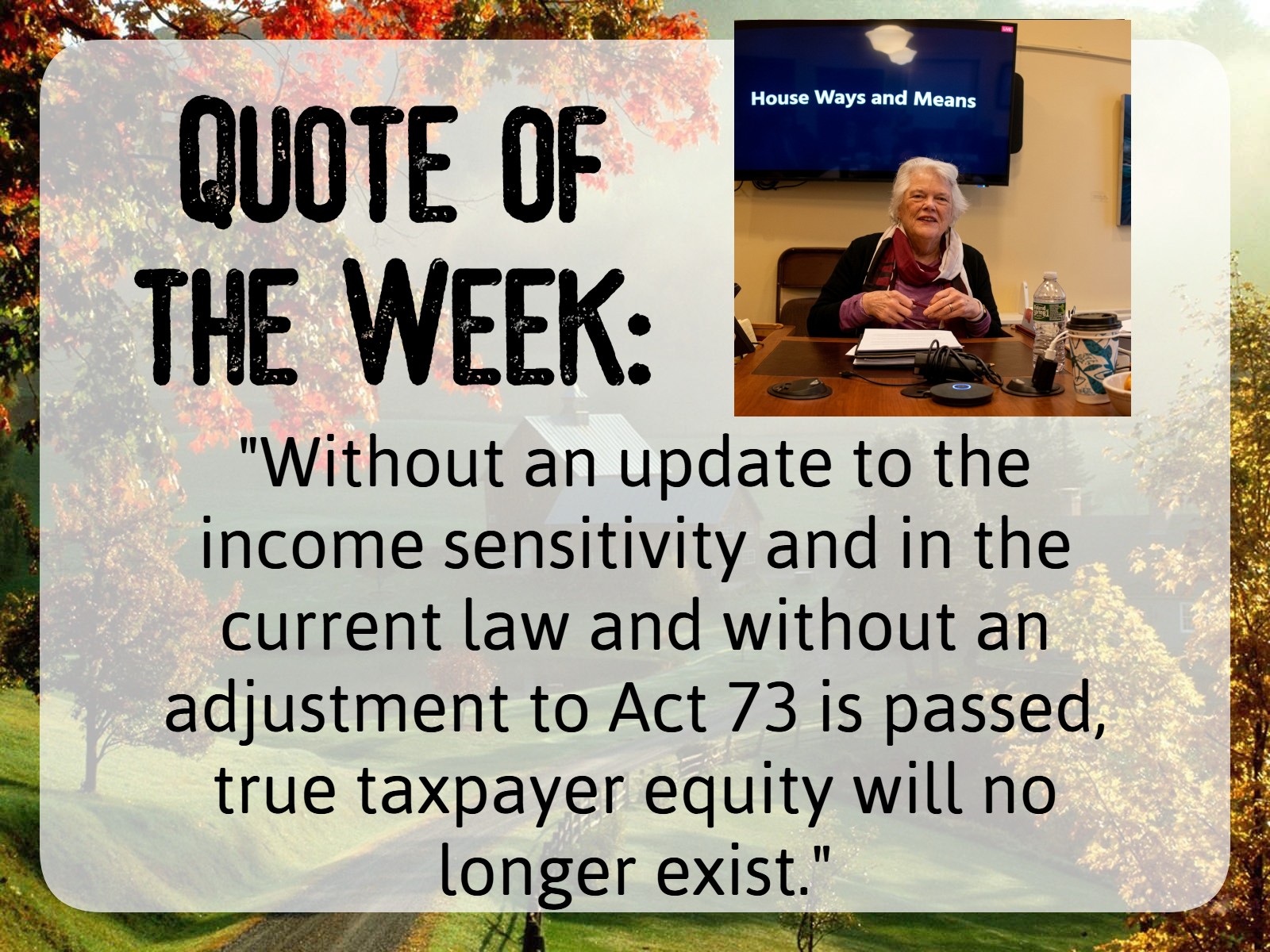
Quote of the Week:"Without an update to the income sensitivity and in the current law and without an adjustment to Act 73 is passed, true taxpayer equity will no longer exist." Comment in regards to how the current income sensitivity thresholds have not kept pace with inflation and other cost pressures... |
|
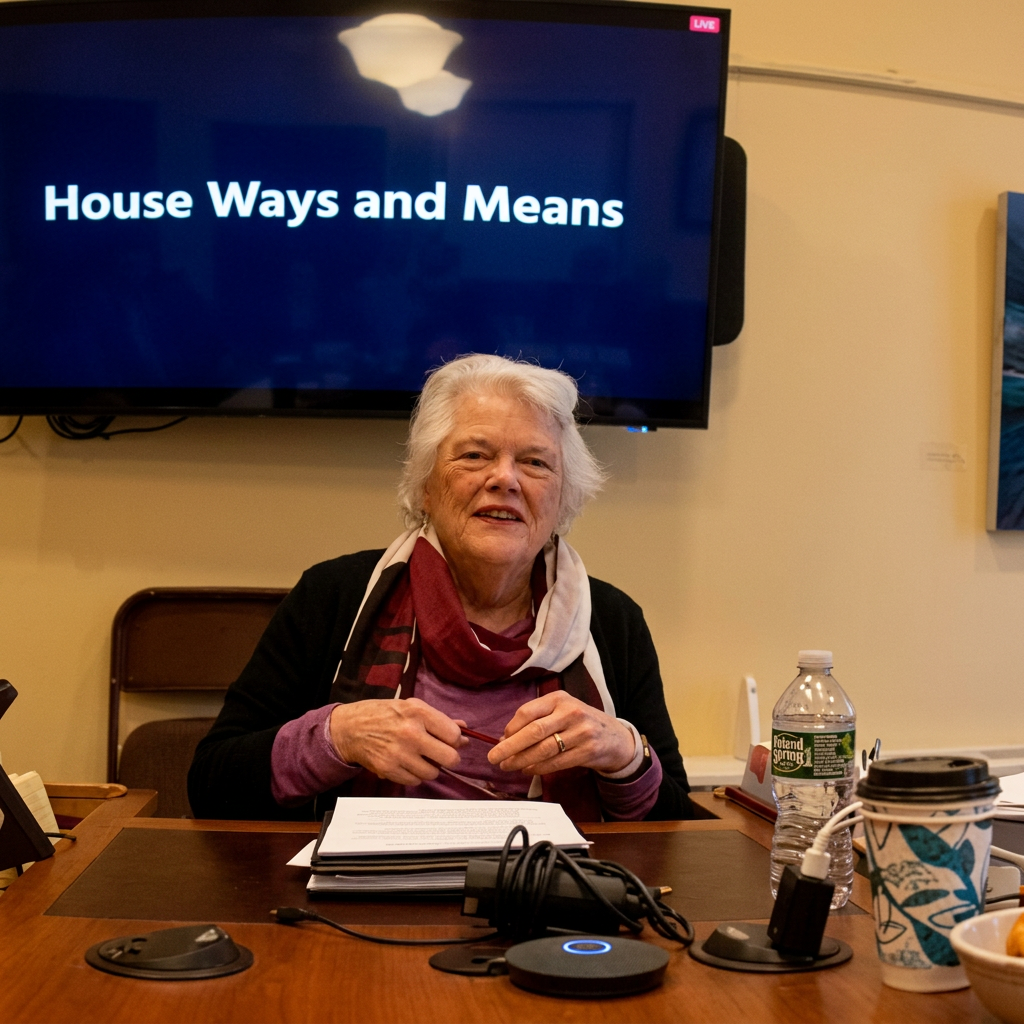
| Karen Lafayette |
| Vermont Low Income Advocacy Council |

Act 250, The First 50 Years, and Beyond
After 50 years of navigating Act 250, a retired civil engineer offers us his assessment: Act 250 killed housing and precluded most of Vermont from having a chance for a vibrant economy.
UPDATED: Delaying Parts of Act 181's Rural Land Use Provisions (S.325)
The bill repealing problematic sections of Act 181 was passed by the House last week and sent back to the Senate. Instead of delaying implementation of the road rule and Tier 3, the House version fully repeals them.


UPDATED: New Tools for Housing Production (H.775)
An innovative housing bill designed to stimulate housing development in Vermont through financial tools, pilot programs, and planning reforms. The legislation authorizes municipalities to issue revenue bonds backed by special assessments, expands the State Treasurer’s credit facility to support mobile home infrastructure and off-site modular home construction, broadens VEDA financing authority for certain multiunit housing developments, and adds new municipal housing-planning requirements.
| To continue reading, please sign up for our legislative updates (it's free!). |