


We leaned into our core strengths in 2025: providing clear, data-driven, nonpartisan analysis at a time when Vermonters are hungry for practical solutions. Our mission remains the same, to reconnect middle-class Vermonters to their government and champion policies that support family-sustaining jobs, environmental stewardship, and social responsibility. But this year, our work took a sharper edge in three key areas: transforming education, defending ethics and government accountability, and confronting Vermont’s long-term economic and demographic challenges.
Education dominated much of the policy landscape, and we were ready for it. Building on years of work, we began by taking a hard look at where Vermont stands. Our analysis of 2024 education spending and outcomes laid bare the growing gap between what we spend and what students actually achieve. From there, we put forward a concrete blueprint in our 2025 Education Transformation proposal—one that keeps local school districts intact while consolidating administrative and back-office functions into a smaller number of Supervisory Unions. The goal is simple but ambitious: deliver better value for taxpayers, expand opportunities for students, and stabilize education tax rates without erasing community identity.
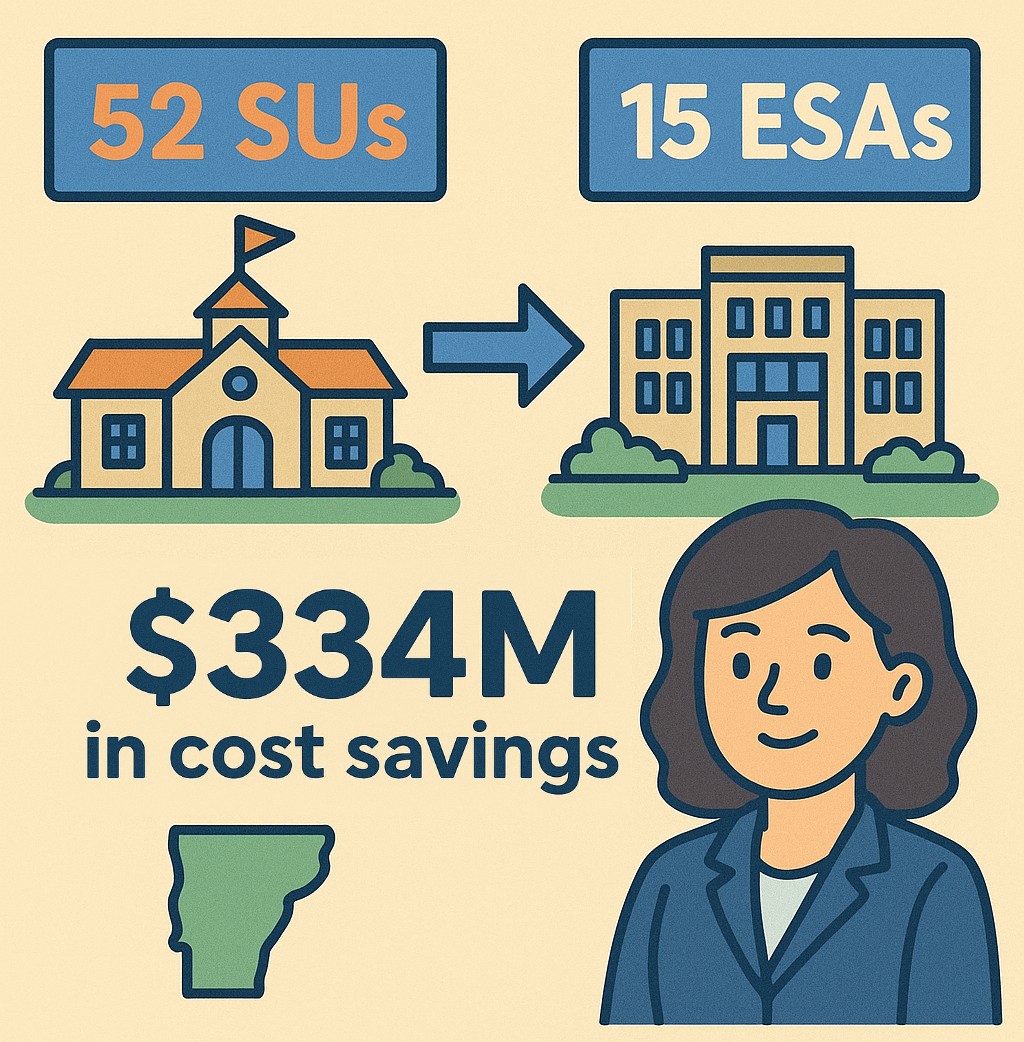
We then did what so few others are willing to do: we ran the numbers. In our report released last month, Finding Savings Through Shared Services in Vermont Schools, we quantified how much could be saved by moving services such as HR, special education administration, transportation, and even Career and Technical Education (CTE) into new regional Supervisory Unions. That work showed lawmakers and voters that meaningful savings and better services are not mutually exclusive. They can go hand in hand if we reorganize the system in an evidence-based way. We also cautioned against consolidating into mega districts, as the evidence says this actually likely to increase costs due to the buy-out of staffing contracts.
At the same time, we engaged directly with live legislative debates. Through our coverage of H.454 (Act 73) conference committee and other pieces of legislation, we helped Vermonters understand how decisions being made in Montpelier would affect their property taxes and local school budgets. Our letters to and analysis of the Act 73 (education reform) Task Force documented how the current funding formula creates a “tragedy of the commons,” in which towns feel compelled to spend more simply to avoid leaving money on the table.
We also highlighted the hidden crisis in Vermont's education system: declining student outcomes. An analysis we published shows Mississippi outpacing Vermont in student outcomes, a dramatic shift from just a decade ago. While Vermont now ranks middle of the pack nationally for test scores (despite the second highest cost-per-student), when you account for demographics, we fall to the bottom five.
Alongside education, we devoted considerable energy to ethics, oversight, and public trust. In a series of commentaries, we made the case for a strong, independent ethics commission that Vermonters can rely on to hold public officials to clear, consistent standards. When legislation emerged that would weaken oversight, we didn’t stay on the sidelines. Our efforts raising awareness about the anti-oversight bill, and our warning not to abandon hard-won progress on ethics, reminded policymakers that transparency and accountability are the foundation of a healthy democracy and a prerequisite for public buy-in on difficult policy choices. We won a partial victory when the Senate chose to delay instead of abandon ethics reforms.
We also continued to draw attention to Vermont’s demographic and economic trajectory. Our work on wealth migration examined how movement of higher-income households in and out of the state shapes our tax base and budget stability. The work we published on Vermont's demographic crisis, Why Population Matters, spelled out what’s at stake when our working-age population stagnates or shrinks—schools, businesses, and public services all feel the strain. Pieces like Things Are Better-ish and Trust Vermont Values offered a candid but hopeful assessment: Vermont has real strengths and deeply held values to build on, but complacency is not a strategy and we are falling behind on some of the metrics that matter most.
Housing was another area where we tried to move the conversation away from frustration and towards solutions. Our analysis of a major housing-related executive order unpacked what it would actually do for production and affordability, and where gaps remained. In “Abundance in My Backyard,” we challenged the assumption that Vermont must choose between welcoming new neighbors and preserving its character. With the right policies, especially lower-cost approaches like modular and manufactured housing (central to our 2025/26 research priorities), we argued that Vermont can both protect what makes it special and create the homes we need.
All of this work informed our 2025/2026 research priorities, which focuses on five high-impact areas:
- Quantifying education savings (now completed).
- Tackling the cost of “affordable” housing construction and exploring modular solutions.
- Finishing our hospital price transparency work.
- Unpacking the drivers of education spending decisions.
- Understanding our true water quality liability (this may be one of the states most under-rated financial liabilities).
Each of these projects is designed with one purpose in mind: to give policymakers better options when they walk into the State House in 2026.
To support this expanded work, we also strengthened our internal capacity. Welcoming new expertise to our advisory council, deepening our bench and ensuring that our policy recommendations are grounded in both data and the Vermont experience.
On top of all of this, we posted 28 bill summaries - making legislation accessible and relatable to everyday Vermonters - and issued 22 legislative updates during the 2025 legislative session.
Looking ahead to the 2026 legislative session, our priorities are clear. We will be pressing for an education reform package that adopts shared-services efficiencies and addresses the perverse incentives in the current funding formula. Further, we desperately need to introduce accountability measures, for both spending and outcomes. We will be also pushing for housing policies that make it feasible to deploy affordable housing at scale, stretching our limited public dollars and private investment further. We will advocate for policies that reduce health care expenditures increase transparency, so both patients and regulators can see where costs are out of line. And we will continue to defend and strengthen Vermont’s ethics and oversight structures, because none of this works without public trust.
None of this is possible without people who believe Vermont can do better, and are willing to support that vision. Whether you contribute financially to our research and advocacy efforts, volunteer your time, or take a few minutes to contact your legislators when it counts, you are part of this work. Together, we can build a Vermont where prosperity is shared, government is accountable, and the values we prize are reflected in the policies we choose.
On behalf of Vermonters,
Pat McDonald
Campaign for Vermont

|
|
Top Post of the Year: A Pathway to Viable Education TransformationA counterproposal for 2025 education reform focused on the learnings from Act 46 and recognizing Vermonter’s preference towards local control of schools. |
|
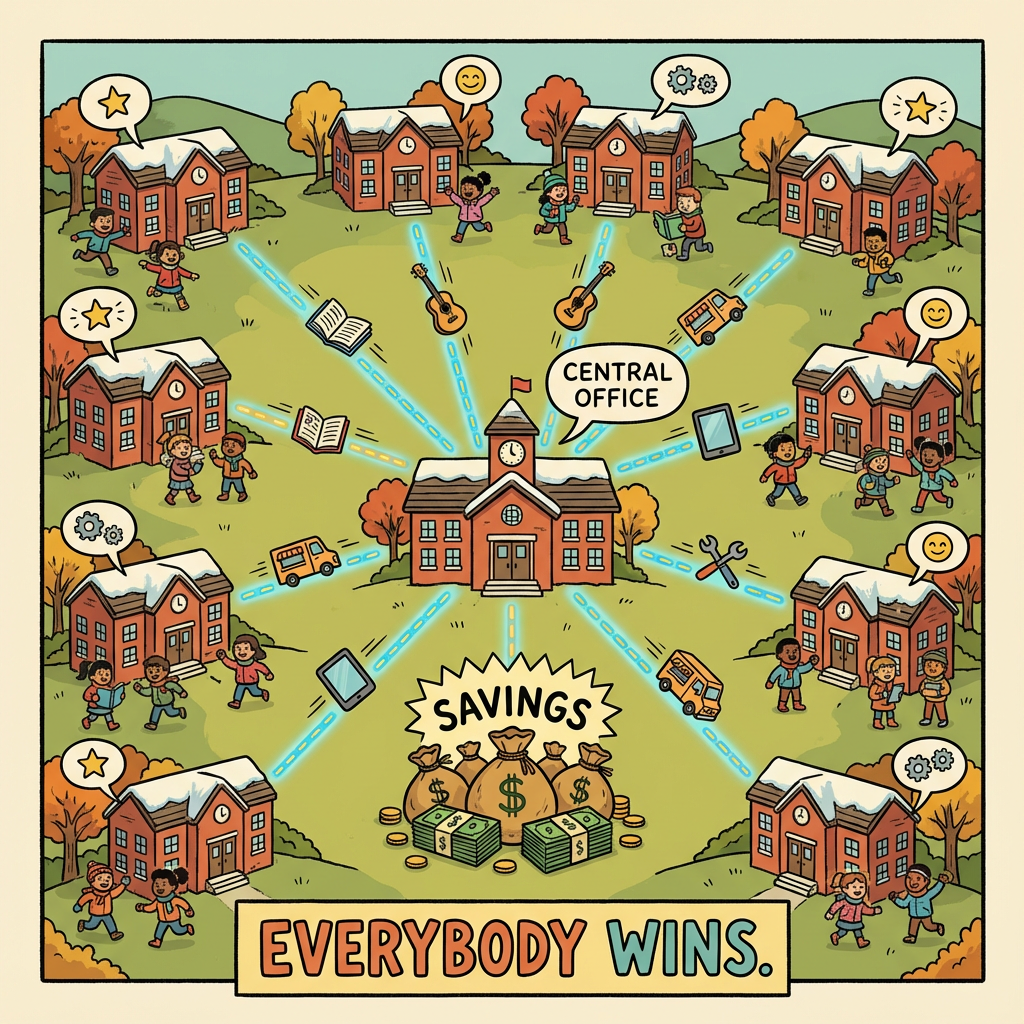
ICYMI: Finding Savings Through Shared Services in VT SchoolsAcross the country, states use Education Service Agencies (ESAs) as regional delivery vehicles so that small and mid-sized districts can pool demand and centralizing expensive, low-frequency services. This lowers per-student costs for participating districts and expands program offerings without every district building its own duplicative capacity. |
 |
|
 |
Letter to Legislators on Education ReformWe sent a letter to legislators urging immediate action to control education spending in the short-term and to pursue data-informed policies that have been proven to control costs in the long-term. |
|
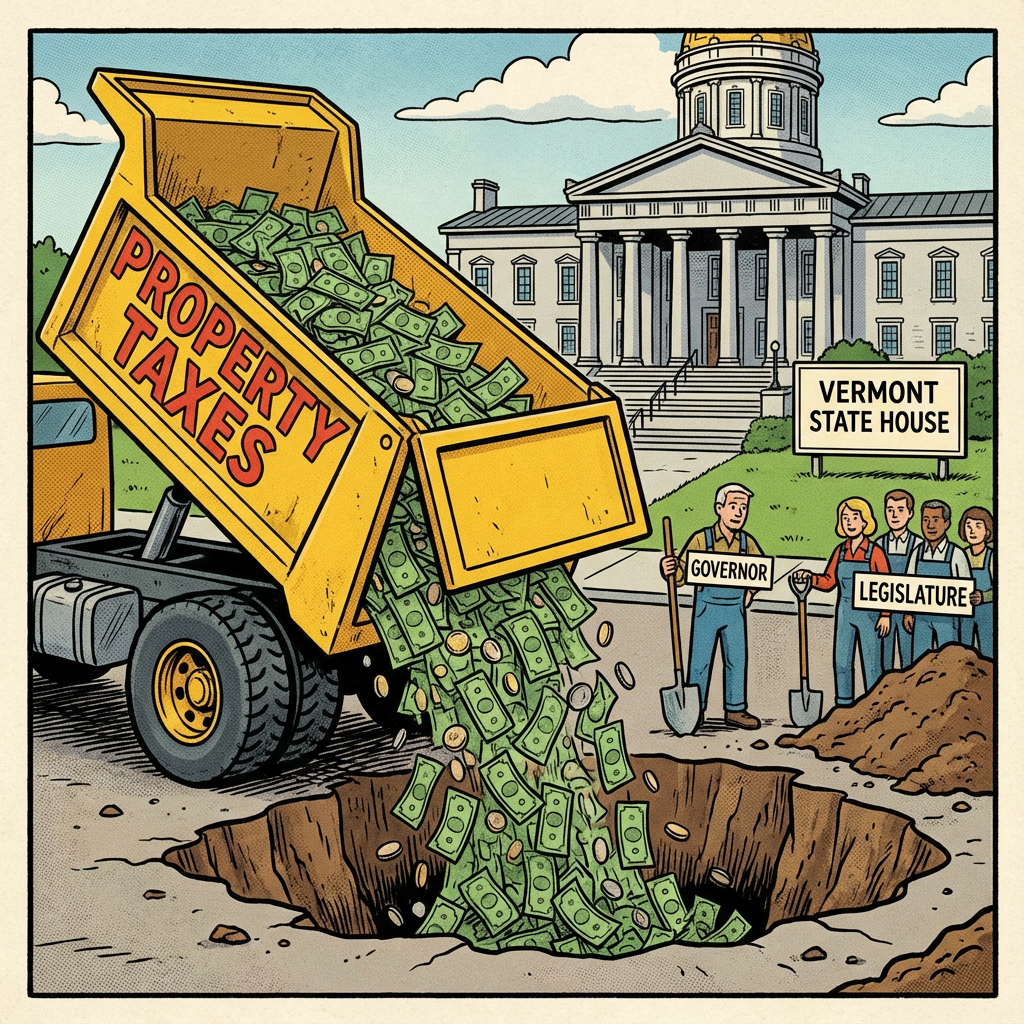
Why Are Property Taxes Going up 12% AGAIN?Everyone wants answers about why property taxes are going up another 12% next year. Some blame small schools, some blame administrative overhead, some blame legislative inaction regarding our education funding system and school governance. |
 |
|
 |
Our 2026 Research PrioritiesEvery year, Campaign for Vermont sets a research agenda for when the legislature is out of session. These are topics that we want to focus on in the spirit of bringing forward new information and recommendations for our state's policymakers. This work might result in new research papers, new position statements, new legislation, or just furthering our own understanding of an issue. |

News Worth Reading:
Our top picks of local must-read news this month.
- Vermont Trapped in "Institutional Sclerosis" - Compass Vermont
- Some Vermont school districts are finding savings through shared partnerships as officials mull voluntary proposal - VT Digger
- Vermonters projected to see nearly 12% hike in property taxes next year - Vermont Public
- Scott Administration Pitches $75 Million Buydown to Help Offset Property Tax Spike - VT Digger
- Corporate Income Tax Revenues Are Down Nearly 43% Year-to-date - VermontBiz
- Vermont Tourism Hits Record $4.2 Billion in Visitor Spending - WCAX
- Hot Off The Press podcasts: the plan to reduce school spending - Vermont Daily Chronicle
Recently Completed Research & Policy Proposals:
- Wealth Migration Report - Published December 11, 2024
- Education Spending & Outcomes Report - Published December 30, 2024
- A Pathway to Viable Education Reform - Published March 7, 2025
- Letter to Education Reform Conference Committee - Sent June 6, 2025
- Review of Yale Report on Effectiveness of Act 46 - Published July 22, 2025
- Letter to Act 73 Task Force - Sent August 12, 2025
- Finding Savings Through Shared Services in Vermont - Published November 10, 2025
Campaign for Vermont's mission is to advocate for public policy changes by reconnecting middle-class Vermonters to their government.