News

April 4, 2026 Legislative Update

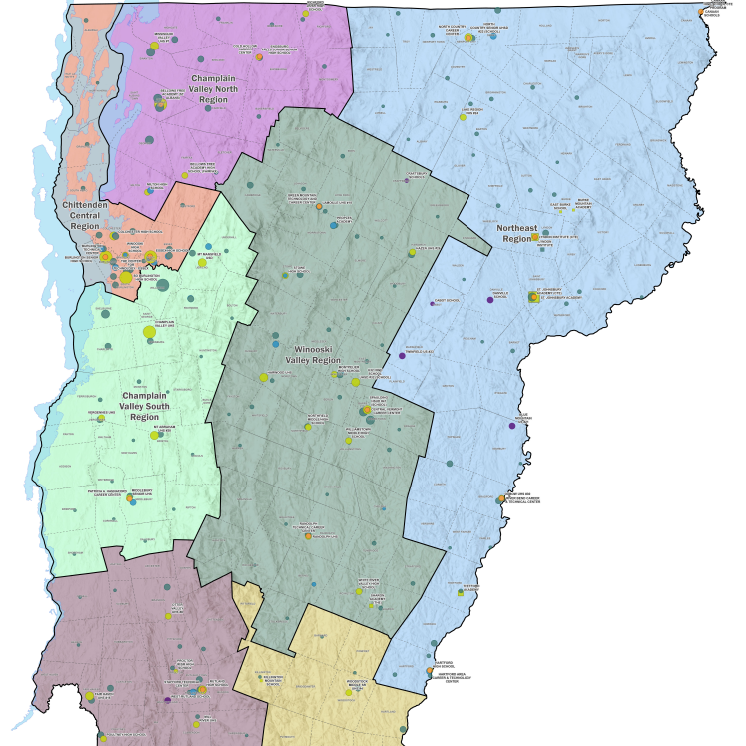
The House Education Committee finally advanced their education reform bill after months of discussion. Of course they couldn't resist drawing maps, even if they are "only advisory" in nature. While the bill does not force arranged marriages (school district consolidation), per se, it does require that you attend the dance (merger study committees) and it chooses who your dance partners will be (which other districts you have to discuss mergers with).

In theory you could choose to dance with someone else or not at all, but that will probably be frowned upon. Okay, enough with that analogy... let's talk about what happened this week...

  • April 4, 2026 Legislative Update

    The House Education Committee finally advanced their education reform bill after months of discussion. Of course they couldn't resist drawing maps, even if they are "only advisory" in nature. While the bill does not force arranged marriages (school district consolidation), per se, it does require that you attend the dance (merger study committees) and it chooses who your dance partners will be (which other districts you have to discuss mergers with).

    In theory you could choose to dance with someone else or not at all, but that will probably be frowned upon. Okay, enough with that analogy... let's talk about what happened this week...

  • Repealing Parts of Act 181's Rural Land Use Provisions (Act 152 / S.325) - Overview & Analysis

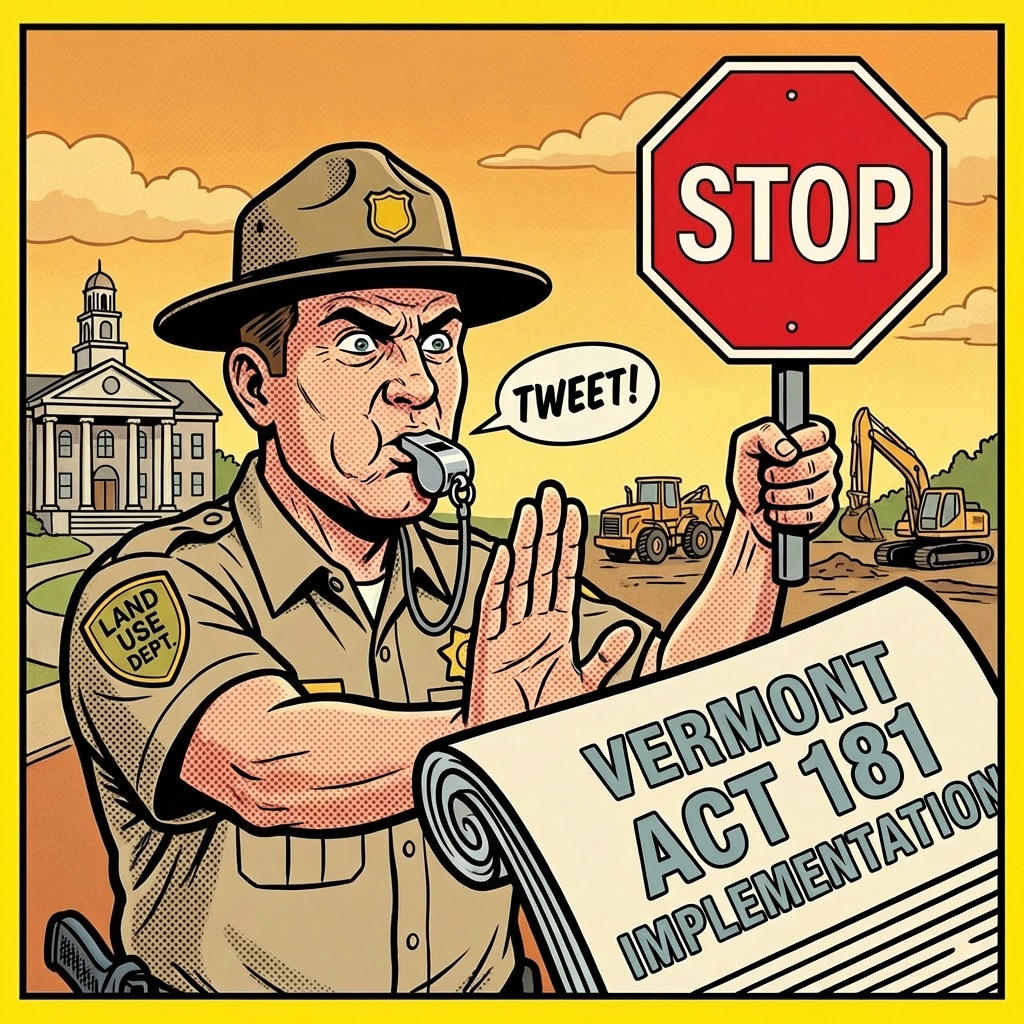
    Act 152 makes technical, transitional, and policy changes to Vermont’s land use and regional planning laws to recalibrate implementation of Act 181. In the House proposal of amendment, the bill repeals Act 181’s road-jurisdiction and Tier 3 jurisdiction provisions, delays certain related implementation dates, extends several housing-related exemptions through 2028, and clarifies how Tier 1A and Tier 1B review will work under the new land use planning framework. It also makes changes to regional planning procedures, creates new reporting and oversight requirements, and adds a public engagement process on working lands and natural resource protections.

  • March 28, 2026 Legislative Update

    A bottleneck of bills hit the floor in both chambers this week. The House and Senate floors were busy passing major legislation on homelessness, health care, housing, and the FY27 budget. Meanwhile, the Agency of Education delivered pointed critique's of both chambers' approaches to education reform (color me shocked) and Ways and Means began inventorying the enormous technical to-do list that sits between Act 73 and anything resembling a workable foundation formula.

    Let's walk through it.

  • Career and Technical Education Transformation (Act 177 / S.313) - Overview & Analysis

    Act 177 is aimed at transforming Vermont's career technical education (CTE) system, expanding student access to CTE, and modernizing program delivery while aligning training with workforce demands. The bill also reforms governance and funding structures and strengthens adult education pathways, and (in the new House Commerce Committee draft) adds substantial new operational provisions including mandatory guidance issuance, a career navigation framework, statutory credit-recognition changes, a redefined concept of comprehensive high schools, CTE educator licensing recommendations, and a formal legislative working group charged with delivering draft governance legislature by December 2026.

  • PRESS RELEASE: CFV Announces the Addition of Elizabeth Brown

    Campaign for Vermont Announces the Addition of Elizabeth Brown

    Non-profit seeking to grow VT’s middle class expands its Advisory Council.


    Montpelier, Vermont – Today Campaign for Vermont Prosperity (CFV) announced that Elizabeth Brown is joining their Advisory Council, expanding the organization’s capacity to advance data-driven, public policy solutions that strengthen Vermont’s economy and communities.

  • FY2027 Property Tax 'Yield' Bill (Act 169 / H.949) - Overview & Analysis

    Act 169 sets Vermont’s fiscal year 2027 (2026–2027 school year) education property tax calculation (known as the yield amount), adds temporary renter credit relief and changes to the excess spending rules, and makes several technical education finance changes.

  • March 21, 2026 Legislative Update

    Friday's crossover deadline built momentum on a number of fronts and the House Education Committee spent this week doing something it has struggled to do all session... converging on a path forward. The answer, it appears, is shared service providers that are being called Cooperative Education Service Areas (CESAs).

    Here's what happened this week...

  • Senate School Governance Plan - Overview & Analysis

    The bill, which does not yet have a number, restructures Vermont’s school governance system by creating a new statewide map of supervisory unions, pushing districts toward larger governance models, and revising parts of the education funding formula, supervisory union boundaries, district mergers, transition grants, education funding, student weighting, and implementation timelines.

  • LETTER: CESAs and the Foundation Formula

    Good Morning Chair Conlon and Members of the House Education Committee,

    CESAs, or some variation of them, are clearly the most pragmatic and viable solution on the table today when it comes to structural forms of our education delivery system.

  • LETTER: Statewide CTE May Exacerbate Some Issues We are Trying to Solve

    Dear Chairman Marcotte and Members of the House Commerce Committee,

    On behalf of Campaign for Vermont, I am writing regarding draft 26-0768, which would create a statewide Career and Technical Education Educational Service Agency (CTE ESA). We appreciate the Committee’s focus on strengthening CTE and agree that Vermont must modernize its education delivery systems to better support workforce development, improve efficiency, and expand opportunity for students.

    However, we are concerned that creating a standalone statewide CTE ESA moves Vermont in the wrong structural direction. The central issue is not whether CTE deserves stronger support, it does. The issue is whether CTE governance should be further separated from the broader K–12 system at the very moment Vermont is debating larger education transformation.