


Last month, Pat McDonald closed out her CFV era with characteristic grace, and with the same full heart and tremendous optimism she has brought to Campaign for Vermont over the past decade. I want to begin by thanking Pat for her years of leadership and for the strong, trusted voice she helped build CFV into. I'm grateful she'll stay close to this community as a member of our Advisory Council. The foundation she and so many others laid is exactly what makes this next chapter possible.
It is my honor to introduce myself as CFV's new President.
For those I haven't yet met, my career has spanned both the private and public sectors—from senior strategy roles in technology and telecommunications to chairing the Vermont Telecommunications Authority, Vermont Public Television, and the South Burlington City Council. Across all of it, one thread has held constant: a belief that good organizations turn good ideas into real results for the people they serve. That is precisely the work ahead for CFV.
I want to be open about how I came to this decision, because it matters. Over the past six months, I've had the privilege of working closely with members of our Board of Directors and Advisory Council to take an honest look at this organization; its strengths, its weaknesses, and its opportunities. What I found was a group of smart, thoughtful, and deeply dedicated people, all working toward the same thing: making Vermont a better place to live, work, and raise a family. So, when I was asked to be part of that, the only answer was yes.
I take on this role with deep optimism, and a clear-eyed readiness for the work it will take to get us there. Vermonters are wrestling with real and pressing challenges: the cost and outcomes of education, the affordability and supply of housing, the rising burden of health care, and the need for transparency and trust in our institutions. None of these are simple. But all of them are solvable when we lead with credible, nonpartisan analysis and practical, data-driven solutions. This is the standard CFV has always held itself to.
In the months ahead, you'll see us sharpen our focus on areas where we can make a real difference. Some of what that looks like:
- Education and literacy. Building on this year's reform debate, we'll advance a coherent agenda that pairs governance and finance reform with a renewed commitment to student outcomes (starting with restoring literacy).
- Ethics, oversight, and public trust. Defending and strengthening the institutions that make effective government (and public confidence) possible.
- Housing that scales. Continuing our push for innovative, practical reforms (like the off-site construction approaches we championed this spring) that actually increase supply and lower cost barriers.
- Health care costs and transparency. Strengthening the evidence base and the public case for policies that lower costs and bring real transparency for patients, employers, and taxpayers.
I also want to echo something Pat said so well: the best chapters of this story are still unwritten. I believe that. Growing Vermont's middle-class, building an economy where every Vermonter can be secure and prosper, protecting the environment we cherish, and championing transparent, nonpartisan public policy is a mission that has never mattered more.
None of this happens without you. To our Board, our Advisory Council, our supporting members, and every Vermonter who reads these updates and contacts their legislators: thank you. Your engagement is the engine of everything we do, and I'm asking you to hang in there with us.
I'm energized, I'm ready, and I can't wait to get to work alongside you.
On behalf of Vermonters,
Pam Mackenzie
President, Campaign for Vermont

| Join Our Newsletter |
|
|
The Final Legislative UpdateAfter months of competing visions and the ever-present shadow of a gubernatorial veto, the final days produced a set of interlocking conference reports that together represent a consequential education policy, a modestly disciplined budget, targeted property tax relief, and a new chapter for transportation finance. |
|
The Vermont Prescription Drug Discount Card Program (Act 132)Act 132 creates a statewide Vermont Prescription Drug Discount Card Program, administered by the State Treasurer, to pool Vermont’s prescription drug purchasing power with other states, territories, and certain non-governmental organizations. The goal is to negotiate lower prices on medications for all Vermonters. |
 |
|
 |
The School PCB Testing Program (Act 130)As amended and passed by the legislature, Act 130 updates Vermont’s approach to polychlorinated biphenyls (PCBs) in schools by extending the statewide indoor air testing deadline, creating a dedicated School PCB Program Fund to support investigation and remediation, linking PCB evaluation to school construction planning, and requiring a statewide cost estimate and funding plan. |
|
Repealing Parts of Act 181's Rural Land Use Provisions (Act 152)Act 152 makes technical, transitional, and policy changes to Vermont’s land use and regional planning laws to recalibrate implementation of Act 181. In the House proposal of amendment, the bill repeals Act 181’s road-jurisdiction and Tier 3 jurisdiction provisions, delays certain related implementation dates, extends several housing-related exemptions through 2028, and clarifies how Tier 1A and Tier 1B review will work under the new land use planning framework. |
 |
|
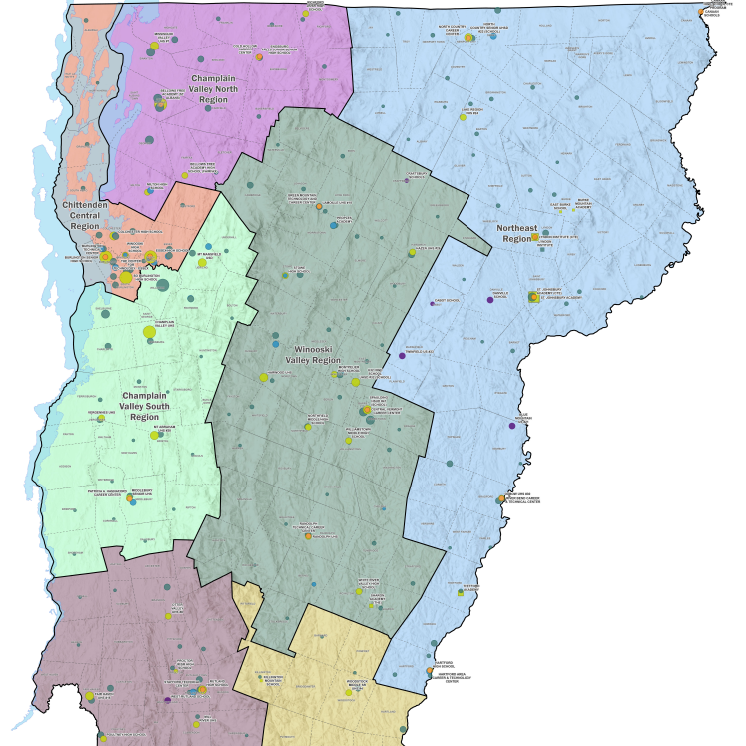 |
CESA's and 'Voluntary' Consolidation (Act 170)Act 170 advances the next phase of Vermont’s education system transformation by creating regional cooperative educational service areas (CESAs), requiring all districts to participate in structured studies of possible union school district formation, delaying major parts of the State’s broader education finance transition, and commissioning further work on prekindergarten funding, education governance, shared services, district reorganization, education finance, and early childhood access. |
|
FY2027 Property Tax 'Yield' Bill (Act 169)Act 169 sets Vermont’s fiscal year 2027 (2026–2027 school year) education property tax calculation (known as the yield amount), adds temporary renter credit relief and changes to the excess spending rules, and makes several technical education finance changes. The real question though: does it set us up for higher or lower property taxes? |
 |
|
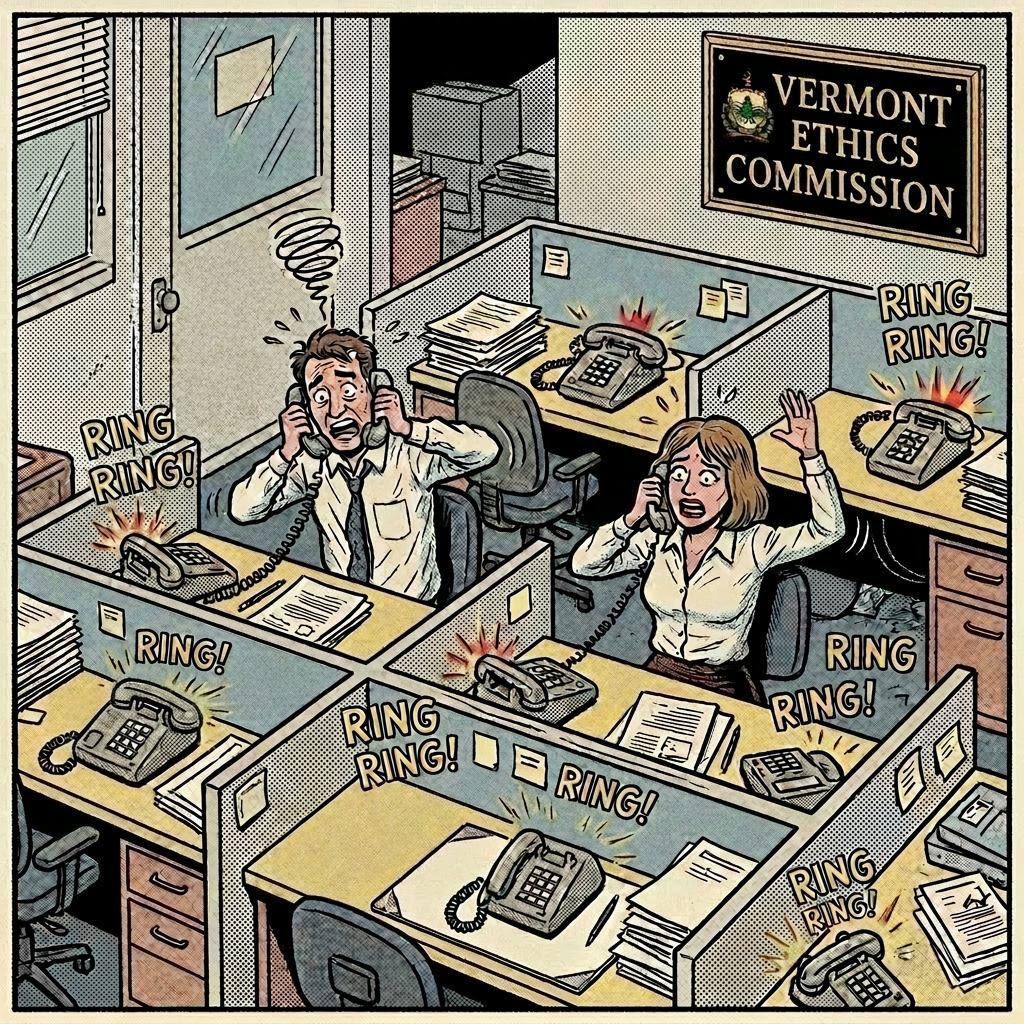 |
Vermont Voting Rights Act (Act 126)Act 126 became a more targeted and operational bill than its original title suggests. In its final form, it builds a state voter-protection structure focused on preventing intimidation, vote denial and dilution, and civil enforcement, while also folding in a set of election administration changes. Lawmakers were also responding to immediate confusion over candidate financial disclosure forms, agency responsibilities, and whether existing institutions have enough capacity to carry out new duties assigned in this bill and elsewhere. |
|
Updating Definitions of Lobbying Advertisements (Act 154)Act 154 as enacted achieves a meaningful but narrower set of reforms than what was discussed and advocated for during committee proceedings. The most important substantive gain in the final law is not a broad expansion of what counts as an advertisement, but rather a stronger reporting framework for covered lobbying advertisements and advertising campaigns costing at least 1,000. |
|
|
|
|
Career and Technical Education Transformation (Act 177)Act 177 represents the opening act of what could be one of Vermont's most consequential education reforms in a generation. The bill correctly identifies the core problems: geographic disparities in CTE access, a tuition-based funding model that creates perverse disincentives for sending schools, fragmented governance across 17 centers operating under three different organizational models, and a growing disconnect between what schools offer and what Vermont's labor market demands. |
|
Primary Care Payment Reform (Act 173)Act 173, remains a significant step in Vermont’s effort to strengthen primary care by reinvigorating the Blueprint for Health while also broadening the conversation toward universal primary care. |
|
|
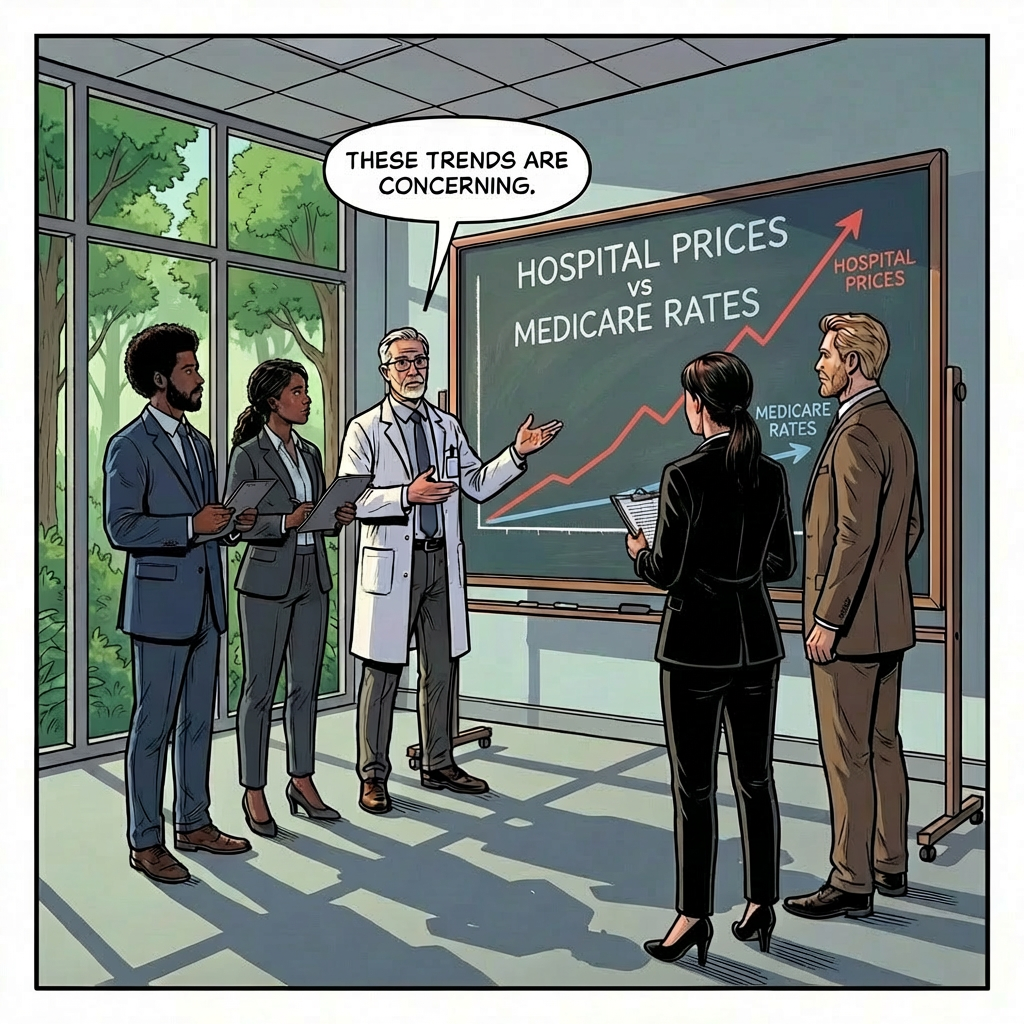 |
VETOED: Reference-Based Pricing and Other Health Care Reforms (S.190)Vetoed by the Governor, S.190 sought to enhance state oversight of healthcare costs and improve financial transparency within Vermont’s hospital system, healthcare reform, hospital budget regulation, and consumer protection. |




| Join us! |
News Worth Reading:
Our top picks of local must-read news this month.
- Only 1 in 5 High School Seniors Is Proficient in Math. Where Does Vermont Land? - Compass Vermont
- Partial rollback of Vermont’s land-use law Act 181 becomes official with Phil Scott’s signature - VT Digger
- Vermont Legislature's sweeping education reform bill becomes law - Vermont Public
- The Labor Force has now lost almost 10,000 workers from a year ago - VermontBiz
- The majority of Americans are proud but worry about direction of the country - Vermont Public
- PAI: Don’t wait till later to talk about school funding - VermontBiz
- Vermont Built a Way to Count the Homes It Builds. The First Count Shows It Falling Further Behind - Compass Vermont
- UVM Health Cuts 142 Positions Amid Ongoing Restructuring - Seven Days
- Scott Blocks Lawmakers’ Push to Speed Up Hospital Price Reform - Seven Days
- Here Are Seven Bills to Know From the Legislative Session - Seven Days
- Compass Points: "Very Limited Opportunities" Mean High School Seniors Are Leaving Vermont - Compass Vermont
- Here’s What It’s Really Like to Attend a Small High School - Seven Days
- Musical chairs: Many Vermont House and Senate leaders won’t seek reelection - VT Digger
- Dairy Farmers of America to Close St. Albans Plant, Supply Store - Seven Days
Campaign for Vermont's mission is to advocate for public policy changes by reconnecting middle-class Vermonters to their government.